
Pacific Northwest Ballet – The Times Are Racing
Seattle Center – McCaw Hall
Seattle, Washington
Digital Performance Stream – October 3-7, 2024
By Steve Sucato
Seattle’s Pacific Northwest Ballet (PNB) opened its 2024-25 season at Seattle Center’s McCaw Hall with the triple bill The Times Are Racing. The live production, filmed for digital streaming on September 20, 2024, featured a new ballet by recently appointed resident choreographer Jessica Lang, plus reprises of Edwaard Liang’s “The Veil Between Worlds” and the program’s namesake ballet by recent Tony Award-winner Justin Peck.
“The Veil Between Worlds” (2021), Liang’s debut ballet for PNB, opened the program. Danced to a commissioned score by British composer Oliver Davis, it began with the silhouette of soloist dancer Leah Terada, stage left, perched in the center of a mound of red fabric. As the stage lights came up, so did Terada, raised into the air on the shoulders of fellow soloist Dammiel Cruz-Garrido, who was made partially visible under the fabric swath. Cruz-Garrido then walked them both backward across the stage, leaving a fabric trail as several other dancers grabbed and pulled the end of the fabric left behind over their heads a la Jiří Kylián’s masterwork “Petite Mort,” disguising Terada’s descent to the stage floor.
The ballet’s cast of ten dancers (women on pointe) then set off into meticulous individual movement phrases, executing various leg lifts, turns, and ballet positions as if performing a less fastidious Merce Cunningham work.
Costumed in leotards of dark-colored bands of red and orange with accents of light blue, the dancers moved on and off the stage singularly and in clusters.
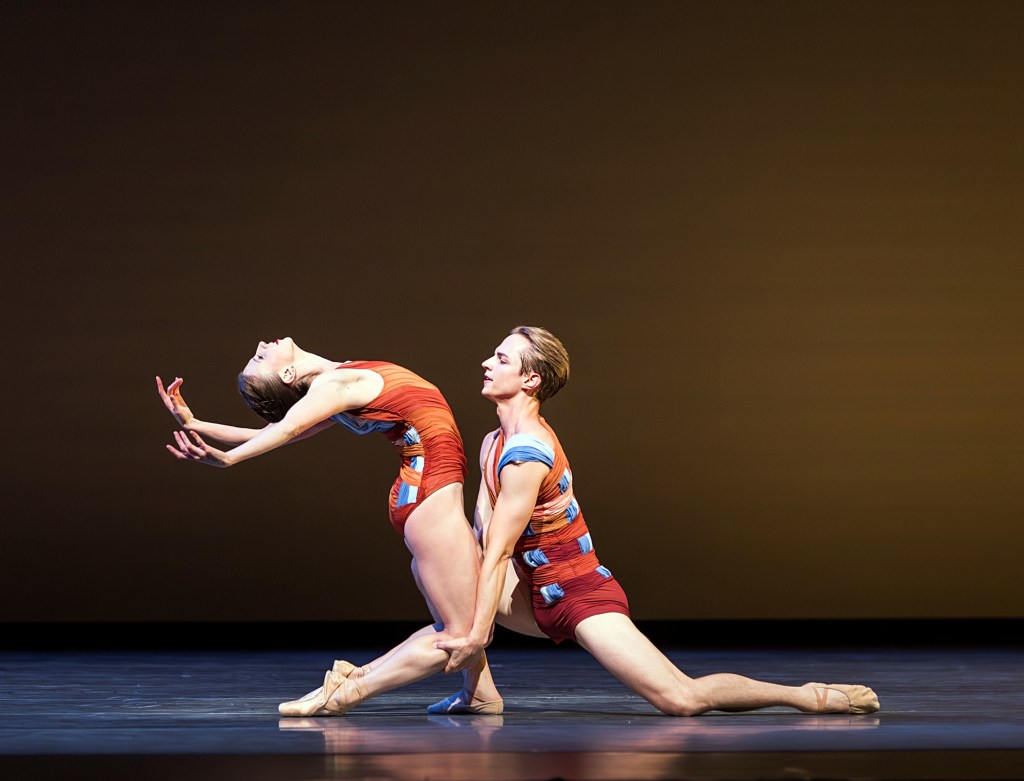
Joyous and lyrical, Liang’s choreography sparkled throughout like contemporary ballet eye candy.
Highlighting the 26-minute ballet were a pas de deux performed by Terada and Cruz-Garrido to searing violin music. In it, Terada draped herself onto Cruz-Garrido’s back as he carried her across the stage. The pair then melted into movement that spun, swayed, and morphed into posed holds and embraces; a solo by principal dancer Dylan Wald in which he emerged from a cloud of fabric into choreography that had him bending and folding his body before once again being enveloped by the fabric cloud disguising his stage exit; and a pas de deux with Wald and wife, fellow principal dancer Elle Macy, intertwined in close-quartered partnering steps and lifts that oozed sculptural beauty.
Next, PNB performed the world premiere of Lang’s fourth ballet for the company, “Black Wave.”
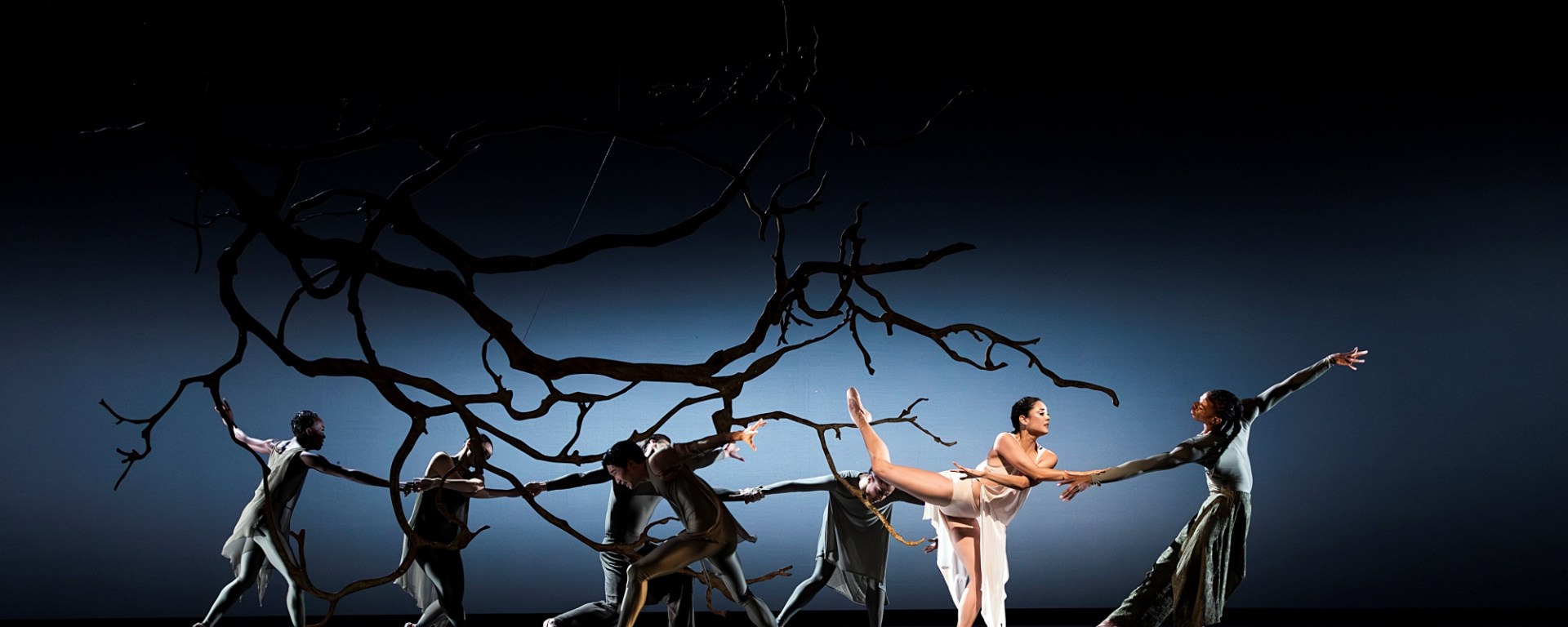
Danced to moody music by New Zealand-based composer Salina Fisher coupled with an equally dark scenic design of a large and barren multi-branched tree limb by Libby Stadstad, “Black Wave” had a surreal vibe.
Lang wrote in the playbill description that the ballet was inspired by “mental health awareness and rooted in the philosophy behind Kintsugi, the centuries-old Japanese art of repairing broken pottery by mending the breakage of treasured objects with gold lacquer.”
That inspiration was manifested onstage in the person of Terada, a woman in distress. Costumed in a leotard with a sheer overdress and pointe shoes, Terada moved from standing and displaying small convulsions to lying facedown on the stage to open the ballet. She was then joined onstage by a solemn Kuu Sakuragi (soloist), who offered her consolation, and several dancer couples who moved around her.
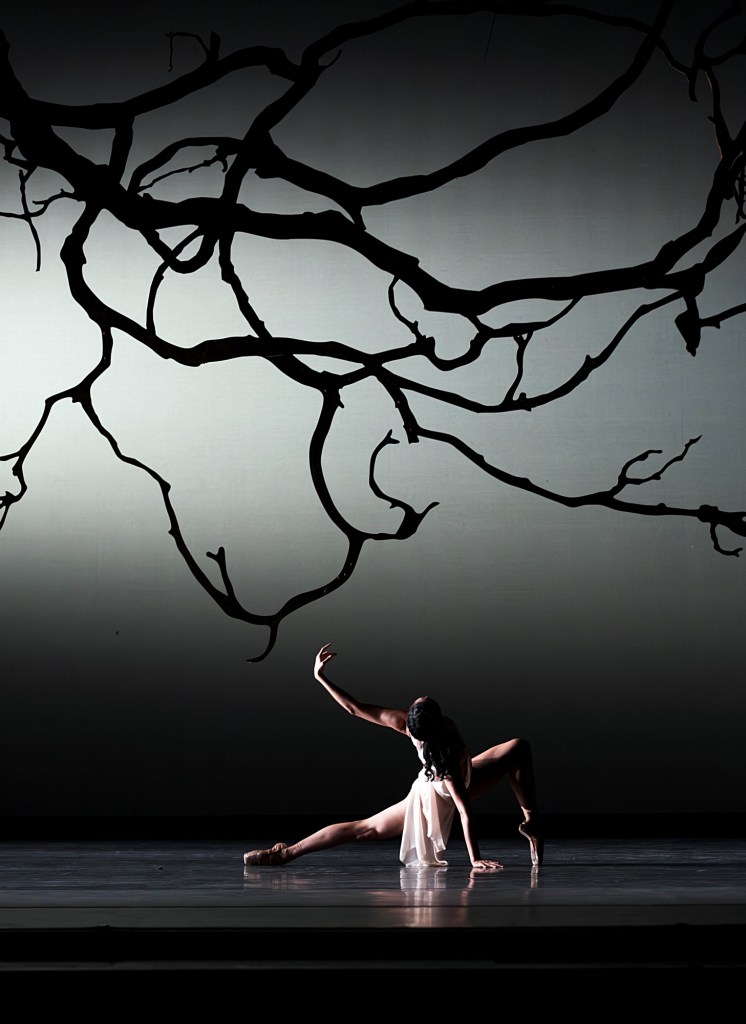
Throughout the contemporary ballet, Terada’s character shifted from appearing to be empathic to the emotions of the other characters to that of a woman with a broken mind or spirit. Was her fragile state connected with these others, or were they memories or symbols of what haunted her?
As the 30-minute ballet for eleven dancers progressed, the tree branch shifted positions onstage. At one point, it lowered, appearing to pin Terada and Sakuragi to the floor. It was as if the branch were a metaphor for Terada’s character’s mental or emotional state. Later, the darkly-colored branch took on a golden color, mimicking the mending in Kintsugi and injecting a glimmer of hope into a ballet mostly devoid of it.
“Black Wave” concluded with Terada standing and swaying back and forth like a tree caught in the wind, as other dancers lie at her feet, acting like the soil that anchors her to the earth or her reality.
Having witnessed several of Lang’s ballets since the early 2000s, “Black Wave” felt like a stylistic departure for her. Its dark, psychological theme required a different level of audience engagement than her other, more accessible ballets. For her part, Terada was the perfect vessel for Lang’s thoughtful and dramatic choreography. Her performance was nuanced and impactful on many levels.
Switching stylistic gears, the program closed with Peck’s energetic 2017 ballet, “The Times Are Racing.”
Set to music by Dan Deacon, the 24-minute sneaker ballet for twenty dancers looked like it was intended for a Broadway show. The dancers, costumed in streetwear, moved about the stage en masse, periodically huddling to lift one dancer high above the group.
Peck’s loose and deceptively simplistic-looking ballet choreography for “The Times Are Racing” was infused with jazz and hip hip movement that looked foreign to, and uncomfortable on, some of PNB’s classically trained dancers.
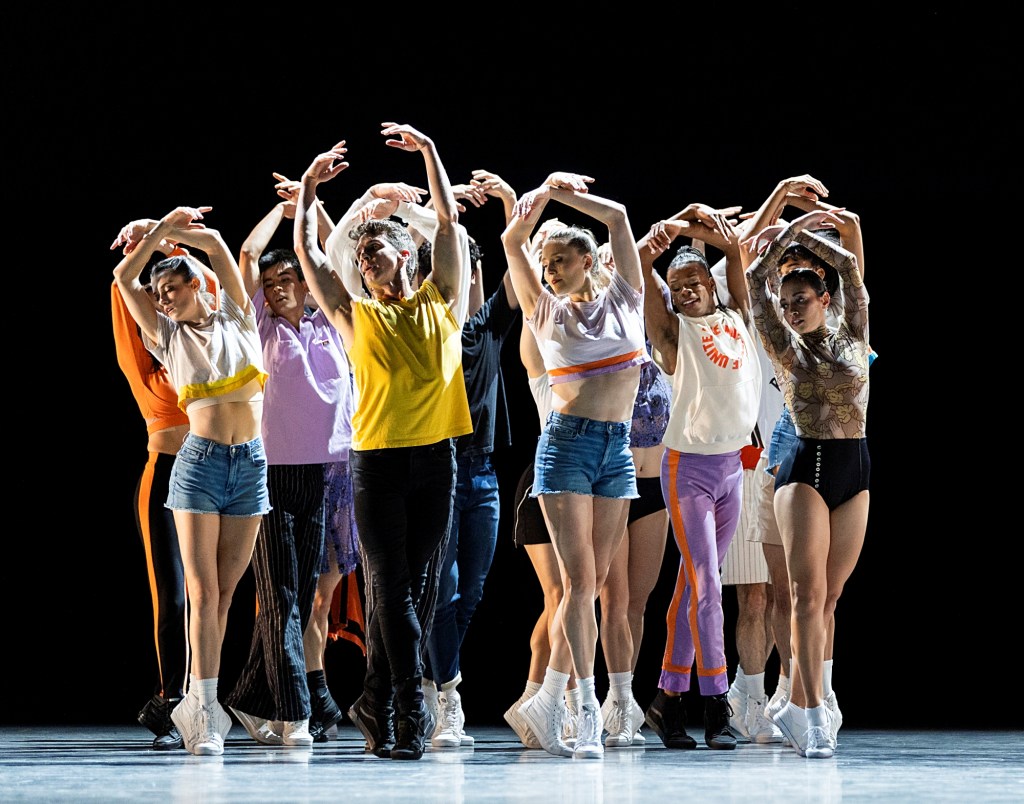
While the ballet’s seemingly non-stop dancing gave one the sense that the times might be racing, sometimes Peck’s choreography appeared to race into a creative brick wall and was trite and uninspired. Other times, however, it could be wholly engaging, such as in a section where dancers appeared to pseudo-tap dance within their balletic movement or in another section where they were joyfully robotic.
Ultimately, the delightful outweighed the lackluster, and the ballet capped a solid season-opening program by one of the country’s premiere ballet companies.
Next up: PNB performs All Balanchine, November 1 – 10, 2024. The program features George Balanchine’s Square Dance, Prodigal Son, and Stravinsky Violin Concerto. Visit pnb.org for information and tickets.

 artsair.art