
By Steve Sucato
Even the brightest of us can disappear from humanity’s collective memory over time. Such was the case for Löie Fuller, a woman made famous for her dances manipulating fabric and her pioneering use of light, color, and shadow in her dance works of the late 19th and early 20th century. A transformative figure in the arts and artist rights, her remarkable contributions and her memory have unfortunately waxed and waned since her death in 1928.
Now, Obsessed with Light, a new documentary about Fuller, joins a recent resurgence in her notoriety. One that turns the spotlight back on this seminal artist, revealing her genius to a new generation.
The documentary, by filmmakers Sabine Krayenbühl and Zeva Oelbaum (Letters from Baghdad), is set to premiere this Friday, December 6, 2024, at New York City’s Quad Cinema. It chronicles the life and work of Marie Louise Fuller, a.k.a. Löie Fuller, a midwestern vaudeville performer born in 1862 in Fullersburg, Illinois. She performed with Buffalo Bill before becoming a world-famous star of Belle Époque Paris and the embodiment of the Art Nouveau movement with her elaborate productions of ephemeral, shape-shifting abstractions.

The 90-minute film begins with the Fuller quote, “Let us first understand what we mean by that word magic,” voiced by the film’s narrator, Cherry Jones (The Village, Signs). The remainder of the film unveils the magic of Fuller and her lasting impact on the world.
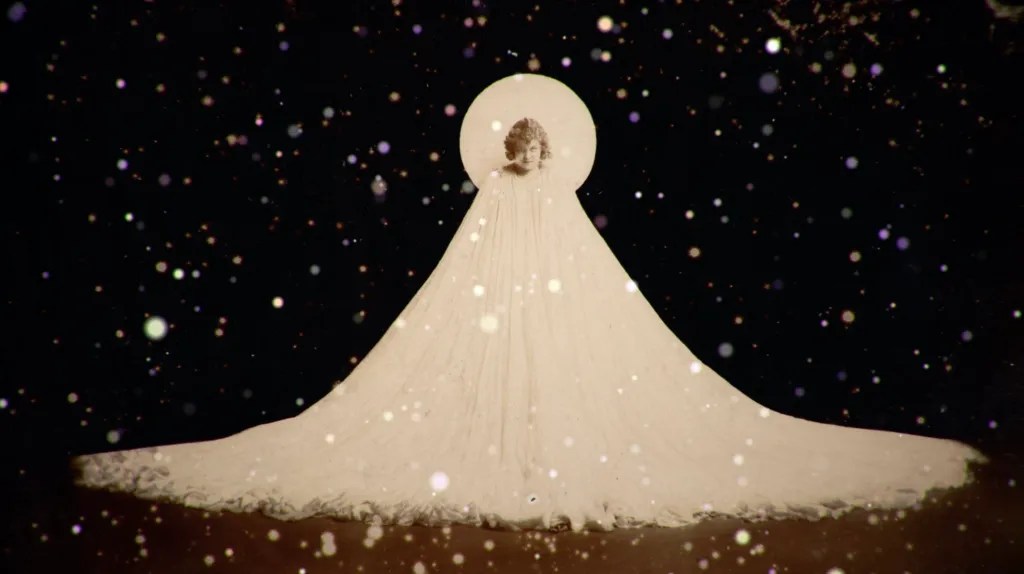
Using Fuller’s own words recited by Jones, photos of Fuller, archive films of Fuller’s imitators, along with on-camera interviews with artists including choreographer Moses Pendleton, Fashion Designer Iris Van Herpen, Puppeteer Basil Twist, and many more, Obsessed with Light moves beyond a mere biopic of Fuller, and into a definitive statement of how she and her work is still influencing the contemporary world around us.
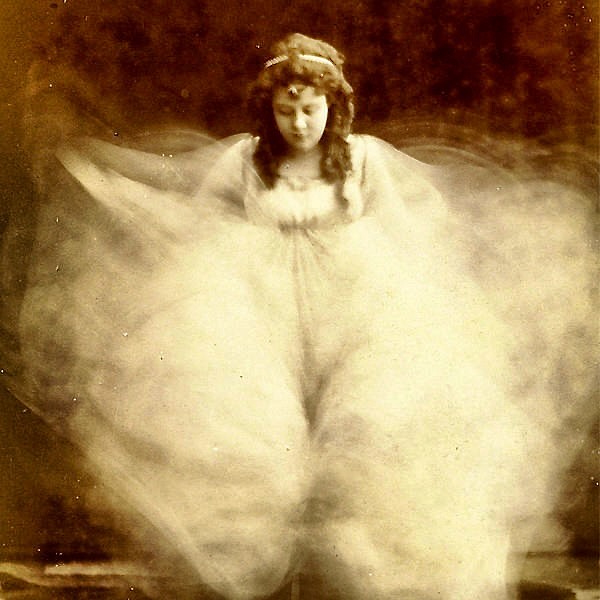
“Why shouldn’t I render into the real world only what we can dream of,” narrates Jones. The film tells how Fuller, after receiving a Nautch girl dress from India sent to her by a friend, began manipulating its abundance of loose fabric to create visually stunning dances never seen before. A self-described stocky woman whose build allowed her to take on the rigors of such fabric manipulation, Fuller was a regular performer at the Paris’ Folies Bergère and created several legendary dances, including the Serpentine Dance, Fire Dance, Butterfly Dance, and Radium Dance.


A through line in the film is the commissioned making of choreographer/dancer Jody Sperling’s Fractal Memories, a contemporary homage to Fuller. Performed by Sperling and her Time Lapse Dance company, the piece provides insight into Fuller’s creative process and uses cutting-edge 21st-century technologies to illuminate and expand upon it.
Sperling first discovered Fuller in 1997 via a chance project for the Library of Congress that involved creating a Butterfly dance in honor of Fuller.
“I had 14’ pink wings and a butterfly cap,” says Sperling. “You think this could have been a one-off project, but once you put on those wings and experience the expansion of the body in space, you feel this incredible sense of power, and you’re hooked.”

Sperling, who was also the choreographer, creative consultant, and dance coach on the 2016 French feature film La Danseuse (The Dancer) about Fuller, says in 1997, not many people had heard of Fuller. In recent years, her legacy has ascended, she says.
“She was such a technological pioneer in performance and the arts,” says Sperling. “There is a kind of resonance in today’s rapidly transforming hi-tech world that is a big part of that interest and appeal in how she used her body to create captivating dynamic visuals in her work. I think a point that this documentary makes very well is that even though she wasn’t very well known for decades, her influence was extraordinary and extraordinarily far-reaching.”
From her work’s effect on audiences and artists, including Auguste Rodin, Isadora Duncan, Henri de Toulouse-Lautrec, Ruth St. Denis, and James A. McNeill Whistler, to those in contemporary culture, such as the Red Hot Chili Peppers, Taylor Swift, Bill T. Jones, Shakira, and William Kentridge, the film makes clear one doesn’t have to look far to see Fuller’s legacy in action.
“There are two Löie Fuller’s, that dancing serif I have created and me.” — Löie Fuller
Beyond the dancing serif, Fuller was an inventor and early advocate of artist rights.
Fuller’s innovative choreography led to legal challenges as she sought to protect her work. In 1892, she filed a lawsuit against imitator Minnie Renwood Bemis in an attempt to secure intellectual property rights for her Serpentine Dance. Although she ultimately lost that copyright bid, the case became a landmark in dance copyright law.
She did, however, patent many of her innovations in stage lighting, including the use of chemical compounds for creating color gel and the application of chemical salts to luminescent lighting and garments.
In one telling scene in the film, noted lighting designer Jennifer Tipton talks about Fuller’s spirit of invention when it came to using light at a time when theatrical lighting was in its infancy.
“In a time when light intensity was not very great, she [Fuller] had the audacity to try and filter in and reflect it and change the color of the light she used on stage,” says Tipton. “It must have been very dark but creepily atmospheric and very beautiful.”
In another scene, theater director and artist Robert Wilson describes Fuller as “a painter of light.”
In pursuit of her art and new discoveries, Fuller crossed paths with a who’s who of luminaries and institutions of her era, from Thomas Edison and Marie Curie to Tiffany and Company.

The film also touches a bit on her personal life, including her relationship with her life partner and business manager, Gab Sorère, Fuller and her dancers’ bouts with cancer, and Fuller’s financial difficulties.
While the film includes a treasure trove of photos of Fuller and archival film footage of her imitators, it skirts informing the viewer that there are no surviving films of Fuller dancing her own dances. Despite that, Obsessed with Light is a magnificent overview of Fuller, her life, and career, and most importantly, her legacy that is still influencing new generations of artists, dancers, choreographers, fashion designers, musicians, filmmakers, and more.
Directed by Sabine Krayenbühl and Zeva Oelbaum
Produced by Zeva Oelbaum, Sabine Krayenbühl
Löie Fuller, Voiced by Cherry Jones
Co-produced by ZDF in collaboration with ARTE
Co-Produced by Christian Popp
Executive Produced by Elizabeth Rodriguez Chandler, Ruedi Gerber, Denise Benmosche, Susan Margolin
Featuring Choreographer/Dancer Jody Sperling
Featuring Theater Director & Playwright Robert Wilson, Choreographer Bill T. Jones, Creative Director at Dior Maria Grazia Chiuri, Theatrical Producer Jordan Roth, Shakira’s Choreographer Maite Marcos, Visual Artist Marcel Dzama, Lighting Designer Jennifer Tipton, Puppeteer Basil Twist, and more.
For more information, visit obsessedwithlightdocumentary.com

 artsair.art