

Maria Caruso’s Bodiography – Evensong
Recorded at the Kelly Strayhorn Theater
Pittsburgh, PA
November 15-17, 2024
By Steve Sucato
Bodiography founder Maria Caruso may now live some 2400 miles away in Los Angeles, but Pittsburgh remains home. The birthplace of Martha Graham, Gene Kelly, and Caruso, the internationally known and celebrated solo dance artist, choreographer, and budding TV and film actress regularly returns to Pittsburgh to work with and create new ballets on Bodiography. The company’s latest production, Evensong, at Pittsbugh’s Kelly Strayhorn Theater this past November was a reflection of Caruso’s work with the company.
Led by artistic director Lauren Suflita Skrabalak, the 5-member company’s program featured six dance works, five choreographed by Caruso and “Tardor,” a work by Italian choreographer Antonello Apicella performed by guest artists from Italy’s ARB Dance Company.
The approximately 80-minute program, which I reviewed from a recording, began with reprises of three of Caruso’s works from Bodiography’s repertory, starting with 2023’s “The Hiding,” danced to Icelandic dream pop band Vök’s 2017 song “Hiding.”
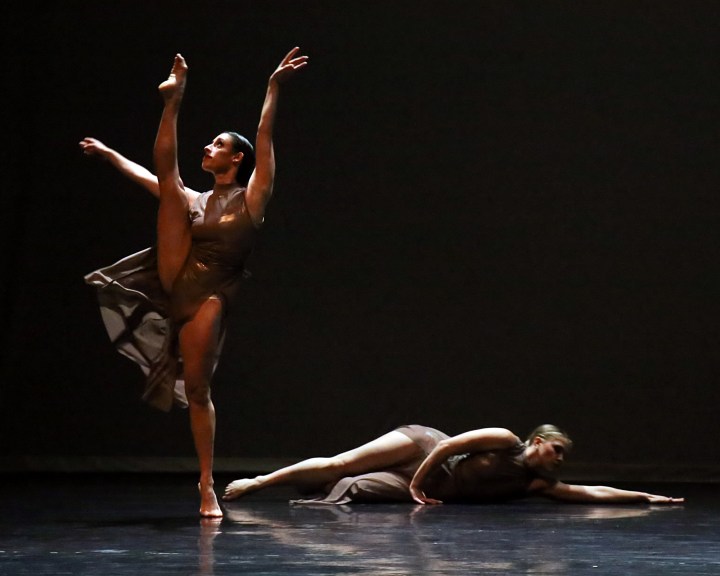
A contemporary duet, “The Hiding,” was performed by Renee Simeone and retiring principal artist Elektra Davis in her last production with the company. Dancing barefoot and costumed in shiny silver leotards with mauve semi-transparent dress overlays, Simeone and Davis shadowed one another, dancing in unison movement phrases inspired by the song’s lyrics that spoke of a desire not to be held back or hide from chasing after one’s dreams.
A brief and pleasantly flowing program appetizer, Simeone and Davis conveyed a genuine emotional connection in performing the duet.
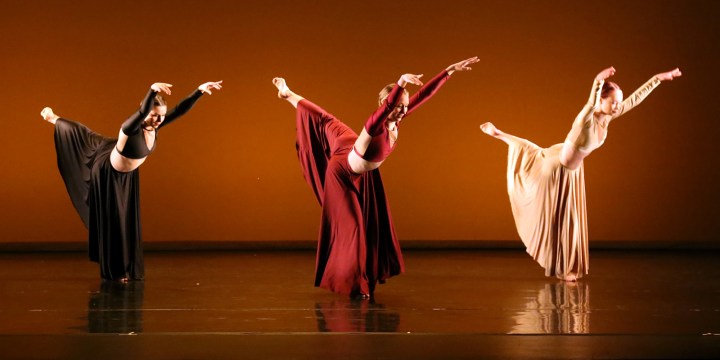
The 2019 trio “Mother’s Prism,” danced by Evelyn Aldrich, Madalyn McMorrow, and Maya Plummer, followed. Performed to piano music by Dustin O’Halloran, the work sought to unearth the many facets of motherhood. It began with each dancer costumed in differently-colored long skirts and matching crop tops dancing in place. The women bent and swayed together before expanding their movement outward on the stage and whirling like dervishes. Stylistically akin to dance works by José Limón and Martha Graham, Caruso’s back-and-forth choreography with repeated movements and complimentary hand and arm gestures had the feel of her version of a liturgical dance where feelings of hopefulness triumphed over those of emotional turmoil, letting the dancers’ souls soar.
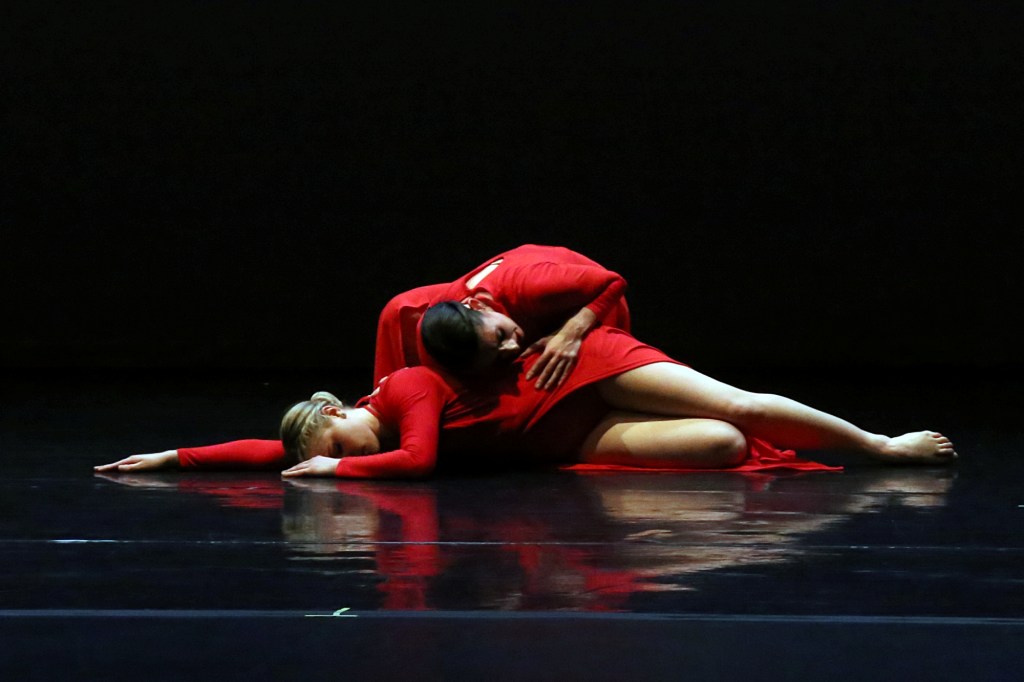
Next, Simeone and Isaac Ray performed the 2009 contemporary dance work “Intimate Liaisons.” Dancing to music by Kronos Quartet, the duet opened with Simeone lying on her back on the stage floor with her eyes closed. Kneeling over her, Ray somberly held one of her hands, then lifted Simeone’s seemingly unconscious body and began manipulating her limbs and moving her about the stage.

When Simeone finally awoke, she and Ray’s roles in the piece switched. She became the aggressor, manipulating Ray’s limbs and body. Their dancing then morphed into unison phrases that were driven by the music’s mix of melancholy and hopeful sections. “Intimate Liaisons” concluded as it began with Simeone back lying on the stage floor with Ray holding her hand as if the dancing that had just happened was a dream played out in Ray’s head.
Apicella’s “Tardor” (the Catalan word for autumn) came next, offering up a stylistic change of pace. Set to music by Cristophe Fillipi and Lino Cannavacciuolo, the duet was performed by ARB Dance Company’s Flavio Altieri and Monica Cristiano. In it, each dancer, barefoot and costumed in street clothes, walked onstage and into individual spotlights. Within those spotlights, they began slowly performing gestural movements with their arms, which snaked around their heads as they lifted their legs and turned in place. As the spotlights faded, the dancers began moving with pace in unison, twirling and bending together and apart from one another.
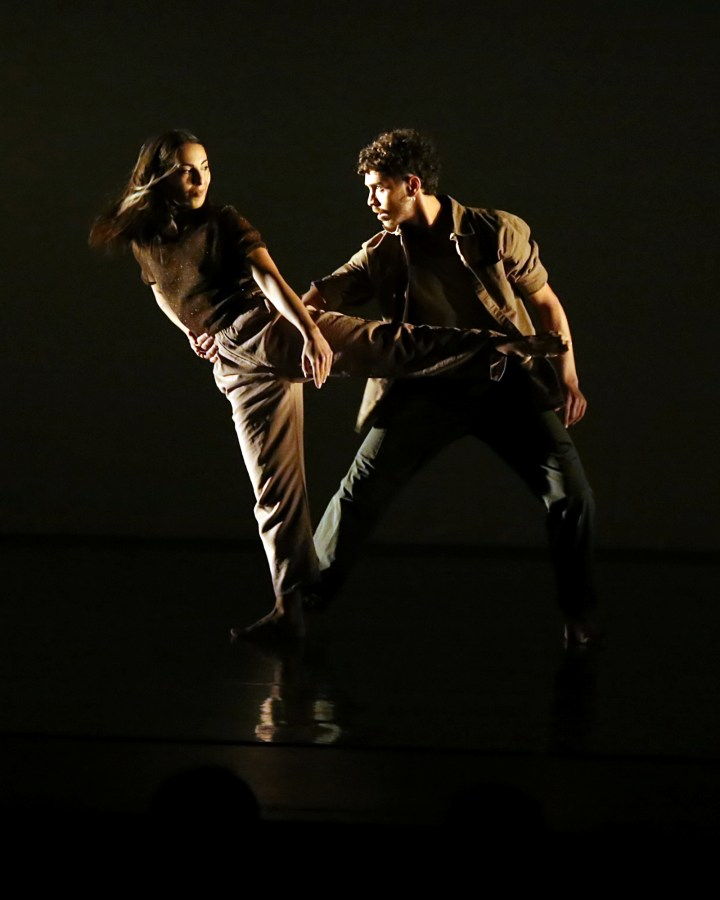
Apicella’s choreography for the piece, while engaging, at times appeared aimless in its intent, and Altieri and Cristiano’s performances of it, while playful, lacked technical polish.
The program’s namesake ballet, “Evensong,” concluded the evening. It was the brainchild of New York-based, award-winning composer Kevin Keller. Inspired by Keller’s fascination with the meaning of the word evensong, referring to a religious service denoting the day’s end, he produced the spellbinding 2023 album of the same name based on vocal music that used church modes and ancient scales that predate the Baroque period’s major and minor keys. Keller then enlisted Caruso to choreograph a new ballet to that music.
As with the program’s earlier work “Intimate Liaisons,” the world premiere of “Evensong’s” opening images found a dancer (Davis) lying on the stage floor. This time, she was encircled by Aldrich, McMorrow, Ray, and Simeone in long white skirts who stood swaying inward and away from her, their arms moving incrementally upward from their sides like the slow flapping of bird wings with each lean in toward Davis in this ritualistic movement pattern.
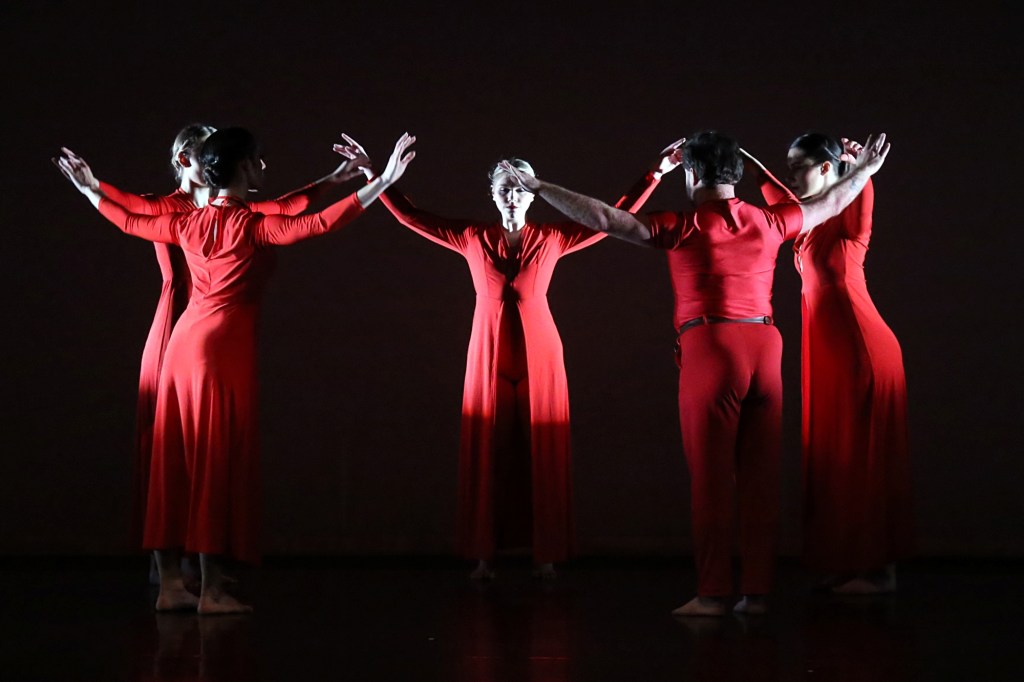
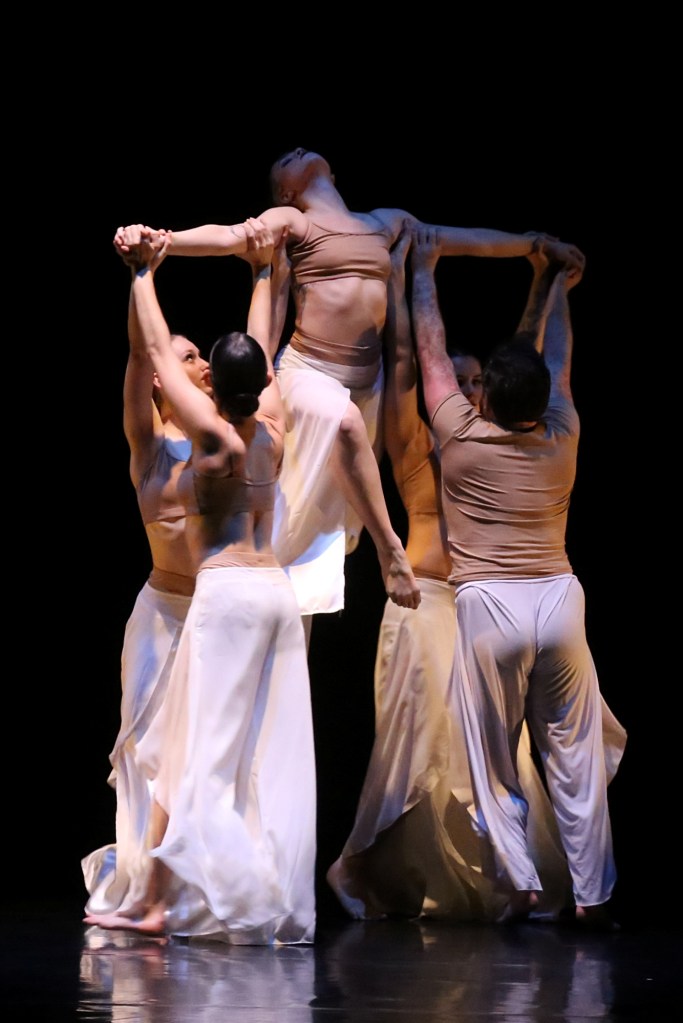
Dancing to Keller’s sacred-sounding choral music, it wasn’t long before Davis awoke and began to interact with the rest of the cast, who lifted her by her arms skyward and carried her about the stage.
Like Caruso’s other works on the program, “Evensong” had her chorographic DNA all over it with familiar dance movements and dancer formations, including circular and canon movement patterns. However, like noted choreographers Mark Morris and Doug Varone, Caruso, stimulated by Keller’s breathtakingly beautiful music,
found ways of organizing those familiar movements into something fresh and engaging.
Danced with intent by the cast, the work throughout was delivered with a cadence and musicality that was satisfying, making it a fitting ballet for Davis to end her Bodiography career on and a company repertory work that bears repeating.

 artsair.art