
By Steve Sucato
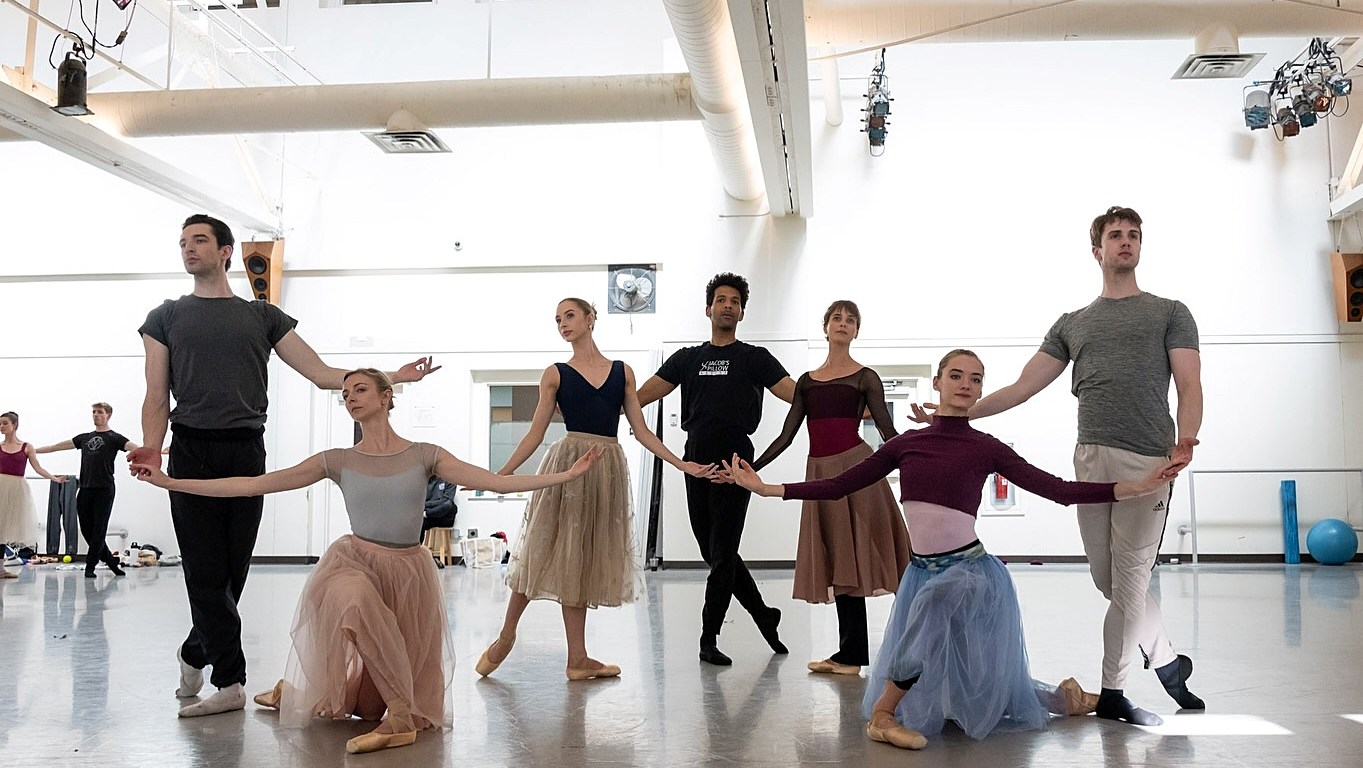
Pittsburgh Ballet Theatre’s Spring Mix: 5 for 55, taking place on April 4-6 at the August Wilson African American Cultural Center, is a mixed repertory program celebrating the company’s 55th anniversary. For it, PBT Artistic Director Adam W. McKinney has programmed five ballets that represent each decade of the company’s existence. They include reprises of Dwight Rhoden’s elegantly moving pas de deux “Ave Maria,” Finnish choreographer Jorma Elo’s rapid-fire contemporary ballet “1st Flash,” set to Jean Sibelius’s Violin Concerto in D minor, and fittingly for this Emerald Anniversary, “Emeralds,” the first section of George Balanchine’s three-part masterpiece, Jewels (1967), danced to music by Gabriel Fauré. Rounding out the program will be two world-premiere ballets.
The first of those premieres comes from PBT choreographer-in-residence and former soloist William Moore. His new reinterpretation of Vaslav Nijinsky’s The Rite of Spring ballet pays homage to PBT’s first decade of ballets and featured company Founding Artistic Director Nicolas Petrov’s 1972 production Rite of Spring.
The Rite of Spring has seen numerous interpretations since its premiere with the Ballet Russes in 1913. Each interpretation has a different take on the ballet’s original storyline relating to themes of ritual and sacrifice while maintaining the use of composer Igor Stravinsky’s iconic original score for the ballet.
Moore’s new version follows in that tradition. Its storyline is about a tribe of people who dwell underground beneath the roots of a sizable tree and whose relationship with the tree is symbiotic, if not parasitic. The 26-minute ballet for a dozen dancers, like most other productions, contains a ritualistic sacrifice of one of the tribe members. This time, instead of a sacrifice to a god or nature for good fortune, the chosen one serves as a host for the tree’s seed and its renewal.
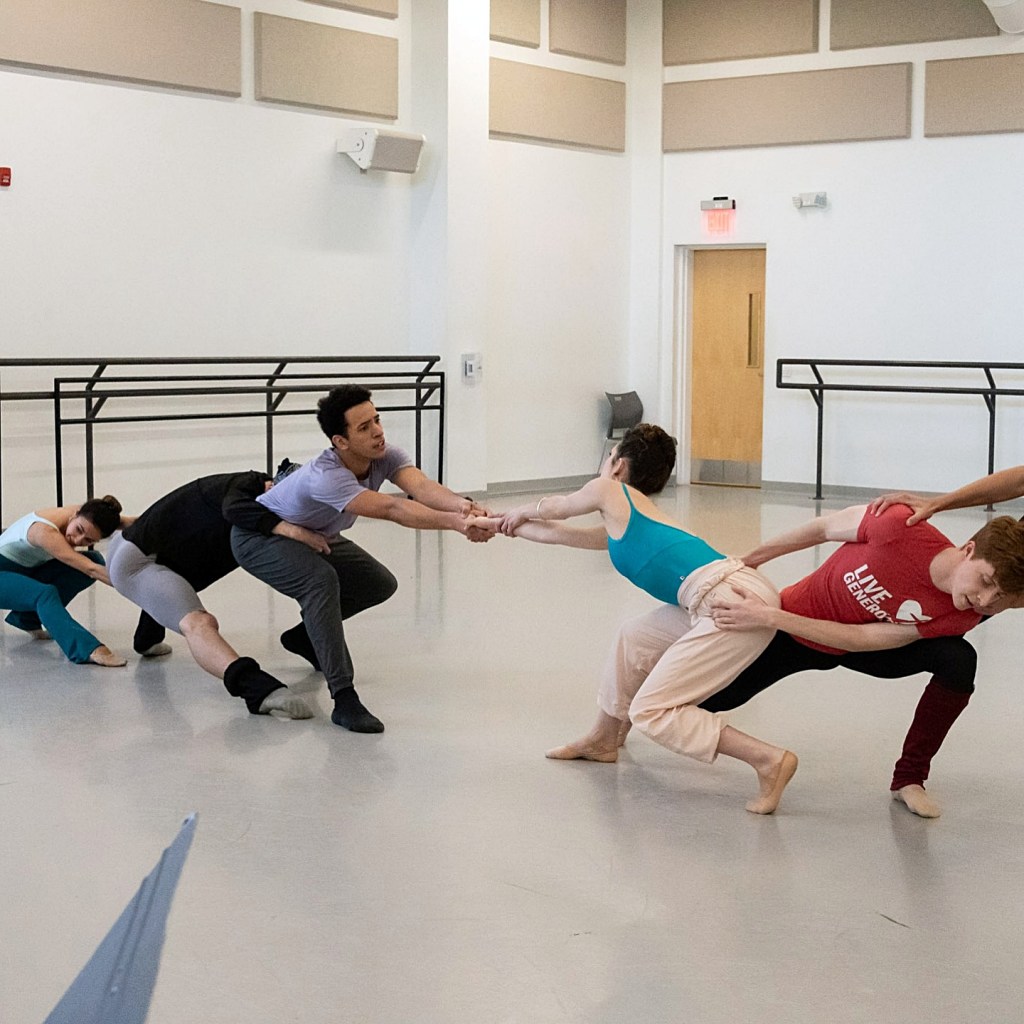

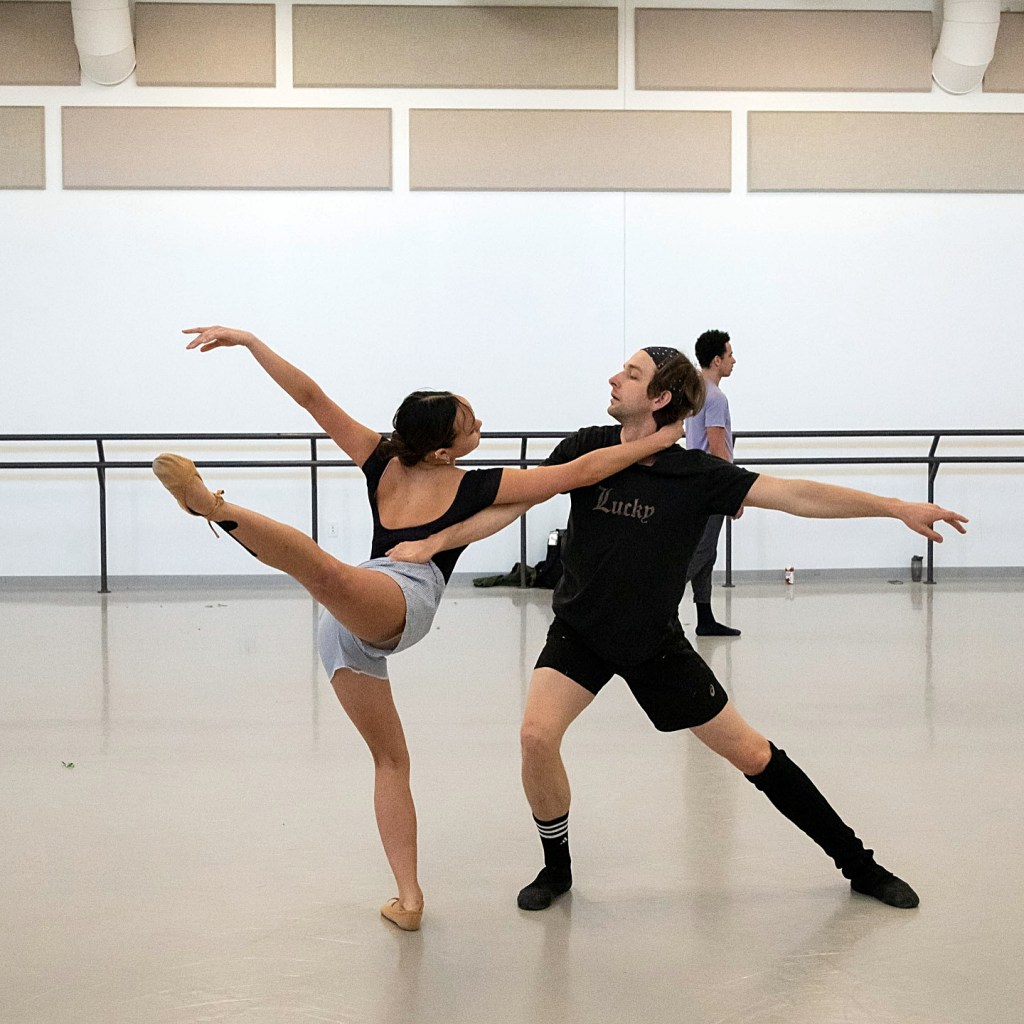
Representing our current decade, the program’s final ballet, “Falling Forward,” is choreographed by rising star Caili Quan.
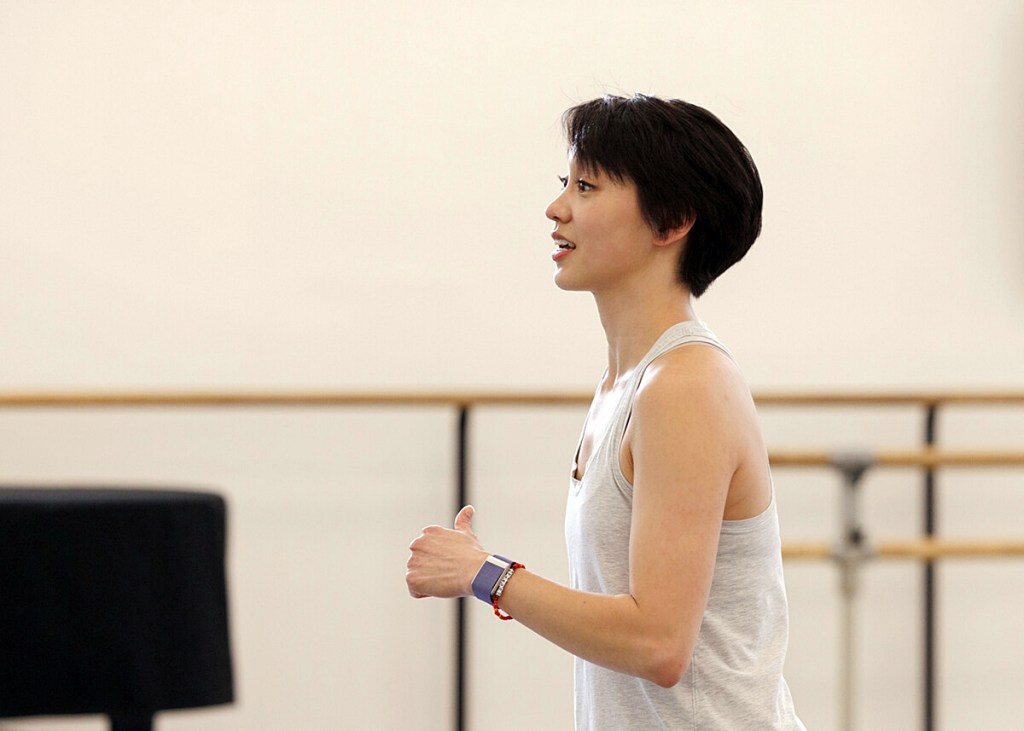
Quan, a New York-based choreographer and former dancer with Philadelphia’s BalletX, has created works for Ballet West, American Repertory Ballet, Sacramento Ballet, and New York City Ballet. I sat down with her recently at PBT’s studios to discuss her career, choreographic process, and her new 10-minute contemporary dance work for eight of PBT’s dancers.
You are of Chamorro Filipino descent and grew up in Guam. How do you feel your cultural heritage shows up in your works?
At big family fiestas, after we had eaten way too much food, a cousin would pick up a guitar, another would play the piano, my aunt would sing, and we would dance. That was an integral part of how I was raised, being surrounded by music and dance. I like to make pieces that feel like home, and I always sneak a cha-cha into my works in some way.
What drives you as a choreographer?
I love the process with the dancers. The back and forth and finding out who they are as dancers. I also love them getting to know how I move and flow in space as a choreographer.
In your mind, what constitutes a perfect choreographic work?
I don’t think there is a perfect work because the great part about dance is it is constantly living. As a choreographer, you tweak and fix as you go along. All my favorite works have been the ones where the creative process has been incredible.
You danced for seven years with BalletX. How much has your approach to choreographing and working with dancers been shaped by that experience?
All of it. I got to be a part of every type of choreographic process imaginable. Sometimes, the choreographers were very clear about what they wanted, and other times, the process was hyper-collaborative, with the dancers choreographing and then the choreographer molding the piece. I took all my favorite processes and formed my way of creating and working with dancers.
Where does your creative process begin?
Music is the biggest inspiration for me. Before choreographing movement, I take long walks and listen to the music, trying to develop a deep understanding of its nuances. You cannot force inspiration. It happens when it happens.
What inspired “Falling Forward”?
I usually pick music that is very flowy and pop-like. I wanted to challenge myself this time to pick music that I wouldn’t naturally choose. On the recommendation of a friend, I listened to Julius Eastman’s 1973 composition “Stay on It,” and I loved it. It’s tricky music to dance to, but it sounds like life to me, in terms of what we’re all going through now. There is a lot of joy and a lot of gut punches in it. I see the challenge for us is to keep moving forward as things fall or don’t fall. For the movement, I was also inspired by old playground games and the idea of three-dimensional spaces on two-dimensional planes.
How has it been working with PBT’s dancers?
They are awesome. I love that each of them has their own very distinctive personality.
How does life as a freelance choreographer compare to your former life as a company dancer?
I miss the comradery in the studio as a company dancer. There is a lonely aspect of being a freelance artist on your own but I do love making my own schedule. I also enjoy working with collaborators and people who know much more than I do.
What do you think you would be doing today if you had not chosen a life in dance?
I would probably be a physical therapist. I have always been interested in the body.
__
Pittsburgh Ballet Theatre performs Spring Mix: 5 for 55, April 4-6, 2025, at the August Wilson African American Cultural Center, 980 Liberty Ave., Pittsburgh, PA.
Schedule
Friday, April 4, 2025 – 7:30 PM
Saturday, April 5, 2025 – 2:00 PM
Saturday, April 5, 2025 – 7:30 PM
Sunday, April 6, 2025 – 2:00 PM
Ticket Information
Single tickets start at $29 and can be purchased at pbt.org or by calling (412) 456-6666. For more information, visit pbt.org.

 artsair.art