

By Steve Sucato
A production of firsts in how Cleveland Ballet’s Romeo and Juliet this weekend can be characterized. It was the very first story ballet choreographer Robert Weiss created for his newly formed Carolina Ballet in 1999, and is now the first Romeo and Juliet production for Cleveland Ballet under Artistic Director Timour Bourtasenkov.
A founding member of Carolina Ballet, Bourtasenkov was also the first to dance the role of Romeo in the production, says Weiss. “I choreographed the role of Romeo on Timour and Juliet on my wife Melissa Podcasy, a former dancer with Pennsylvania Ballet and Switzerland’s Ballett Basel.”
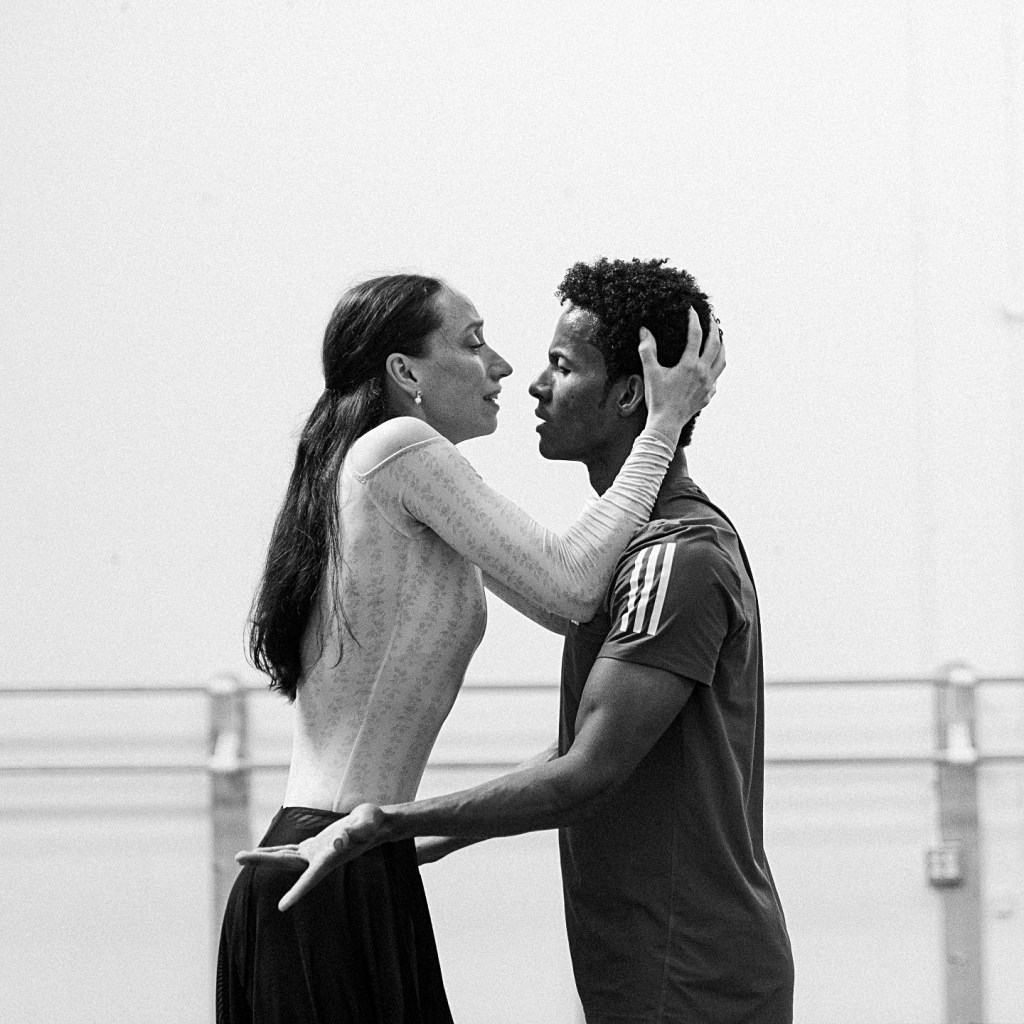
The ballet will also be the first time Cleveland Ballet prima ballerina Svetlana Svinko will be dancing the role of Juliet in her 16-year professional career (Click here to learn more about Svinko). She will perform the role with partner Johan Mancebo as Romeo, on Friday, May 16 at 7 p.m. and Saturday, May 17 at 1 p.m. Fellow company star Albina Ghazaryan will perform Juliet on Friday, May 16 at 10:30 a.m. and Saturday, May 17 at 7 p.m. Her Romeo will be Lorenzo Mattia Pontiggia, a native of Segrate, Italy, about 90 minutes from the fictional Romeo’s hometown of Verona.


Area audiences have gotten a healthy dose of Weiss’s ballets in Cleveland Ballet’s past few seasons, including his Sleeping Beauty in 2024 and The Masque of the Red Death this past October. Romeo and Juliet continues that trend.
“It’s pretty hard to fail making a Romeo and Juliet ballet,” says Weiss. I followed the libretto that choreographer Leonid Lavrovsky and composer Sergei Prokofiev put together for the original, and I think my version is faithful to that text.”
For Weiss, faithfulness meant being true to the main characters’ emotional states described in the libretto.
“There are several pas de deuxs for Romeo and Juliet in the ballet,” says Weiss. “The first is during the balcony scene where they fall rapturously in love. The second is the bedroom pas de deux after Romeo has killed Tybalt. The couple spends the night together, and when they wake up in the morning, a lot of other ballet versions still have them feeling rapturous. In my version, Juliet gets very upset with Romeo for having killed Tybalt, and I show that.”
A former principal dancer with the New York City Ballet, Weiss says, “George Balanchine was the biggest influence on my choreography for sure. To me, his ballets were on a higher level than anyone else’s.”
Weiss says that for Romeo and Juliet, he tries to emulate Balanchine’s approach of telling the story through the dance with as little mime as possible.
Another thing Weiss gets from Balanchine is being concise in the storytelling.
For his ballet version in three acts and two intermissions, he trimmed Prokofiev’s original Romeo and Juliet score to tighten the ballet up to run a little under two and a half hours.
Weiss also makes the production his own by having all the female characters, including the peasants, dance in pointe shoes. “I think it makes the choreography a little more lively,” says Weiss.
Unlike the libretto and many other ballet versions, Weiss also does not bring back the Paris character toward the end of the ballet.
“I thought it was anti-climactic to have Paris come back and have a fight with Romeo in the crypt,” says Weiss. “It stops the momentum of the tragedy between Romeo and Juliet.”

For the ballet’s several other fight scenes, Cleveland Ballet’s dancers received special sword-fighting training from choreographer and fight director Jeff A. R. Jones. Romeo and Juliet’s staged combat sequences require precision, trust, and a blend of ballet technique and swordplay.
Cleveland Ballet’s production will also have the look of Weiss’s original, having bought the sets and costumes from Carolina Ballet. The opulent Renaissance costumes were first constructed and used by The National Ballet of Canada, then were purchased by Pennsylvania Ballet, Carolina Ballet, and now by Cleveland Ballet.
Having seen a recording of the 1999 production, I expect the ballet to be another milestone in the development of this current iteration of the Cleveland Ballet as one of the leading ballet companies in Ohio. Weiss’s version marvelously conveys William Shakespeare’s universally known story of two star-crossed lovers with all the pomp and circumstance, passion, heartache, and substantive dancing one would want in a Romeo and Juliet production.
Cleveland Ballet performs Romeo and Juliet, Friday, May 16, at 10:30 a.m. (Pay What You Can dress rehearsal/student matinee) and 7 p.m., and Saturday, May 17 at 1 p.m. and 7 p.m. at Playhouse Square’s Mimi Ohio Theatre, 1511 Euclid Ave., Cleveland. Tickets start at $30. To purchase tickets, visit cleveballet.org/romeo-juliet or call Playhouse Square ticketing at 216.241.6000.

 artsair.art