
Pacific Northwest Ballet
Emergence – Digital Performance
March 27-31, 2025
By Steve Sucato
The fourth repertory program on their 2024-2025 season, Pacific Northwest Ballet’s Emergence, was some of the finest contemporary ballet presented this dance season.
The jam-packed program kicked off with the world premiere of PNB soloist Price Suddarth’s second mainstage ballet for the company, “Dawn Patrol.”
The digital performance of Emergence, which I reviewed, was filmed live on March 14, 2025, at Seattle’s McCaw Hall.
It began with corps de ballet dancer Noah Martzall standing alone onstage, lit by a single overhead light off in the distance that shone down on him like radiant moonlight. Martzall sank into a deep plié with his arms extended toward the audience and his head bowed. Rising back up, he then launched into a twisting and turning solo dance that was part balletic and part martial arts kata.
Martzall was soon replaced onstage by principal dancer Elle Macy and a male partner who continued Suddarth’s sophisticated and elegant ballet choreography, dancing to heartfelt violin music by Alfonso Peduto.
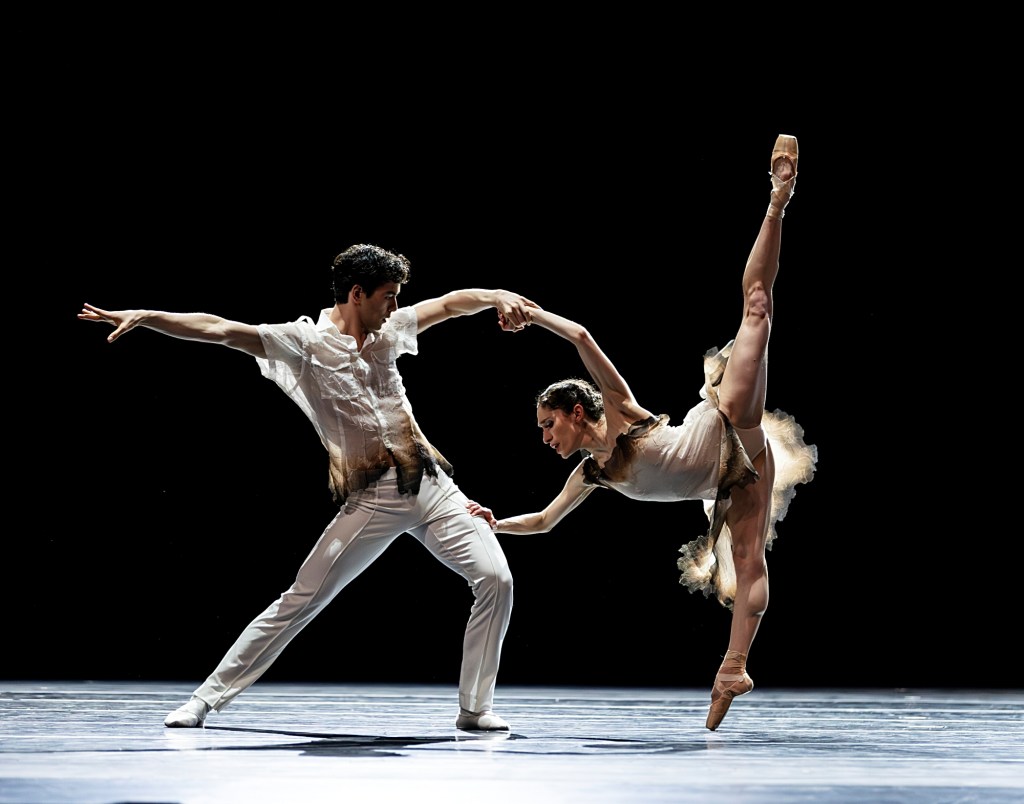
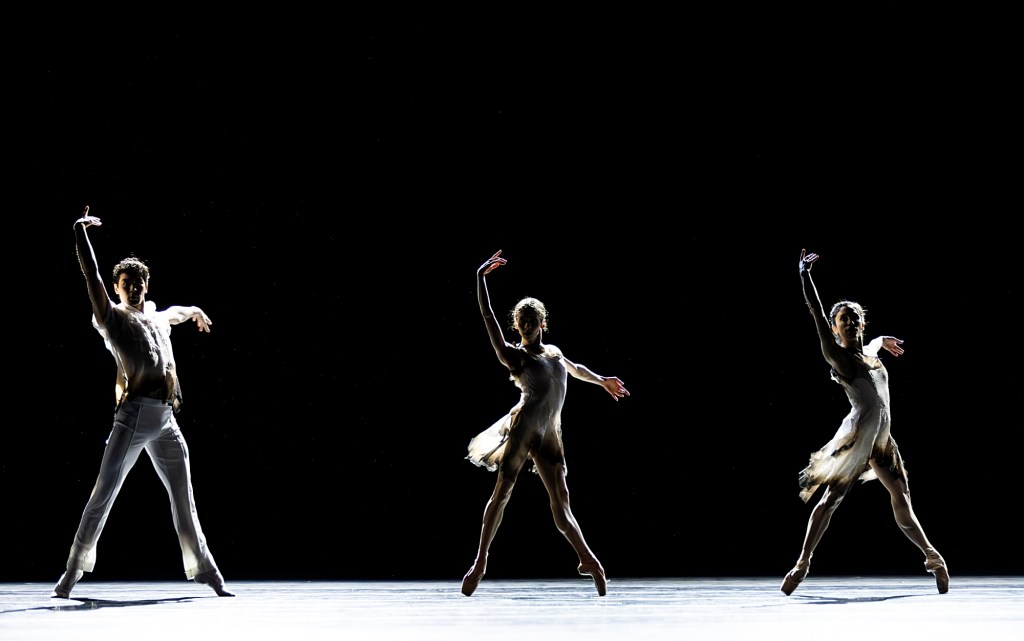
A lighting blackout and a change in the music to a driving beat then transitioned the ballet to a scene with ten dancers strutting across the stage. Their loose hold on unison dancing proved less engaging than the pas de deux sections that surrounded it.
It became evident with the ballet that, as both a dancer and a choreographer, Suddarth knew the type of movement that felt good on his own body and on the others. The ballet’s cast appeared at ease with Suddarth’s choreography as if it were second nature.
“Dawn Patrol” then continued with more pas de deux pairings, each as delicious as the last in their construction and flow.
Principal dancer Leta Biasucci finally broke up that pattern, performing a measured solo dance that was dense with twirling and twisting movement.
Like many contemporary ballets performed in front of a simple black backdrop, “Dawn Patrol” relied on its fabulous dancing above all else. PNB’s dancers leaned into Suddarth’s start-stop contemporary ballet movement phrases and patterns with skill. But as marvelous as the ballet began, Suddarth’s choreography, unfortunately, changed little as the work progressed and grew tiresome.
The program continued with Jerome Robbins’ 1953 re-envisioning of Vaslav Nijinsky’s “Afternoon of a Faun” (1912). In it, Robbins brought the faun out of the forest and into the ballet studio.
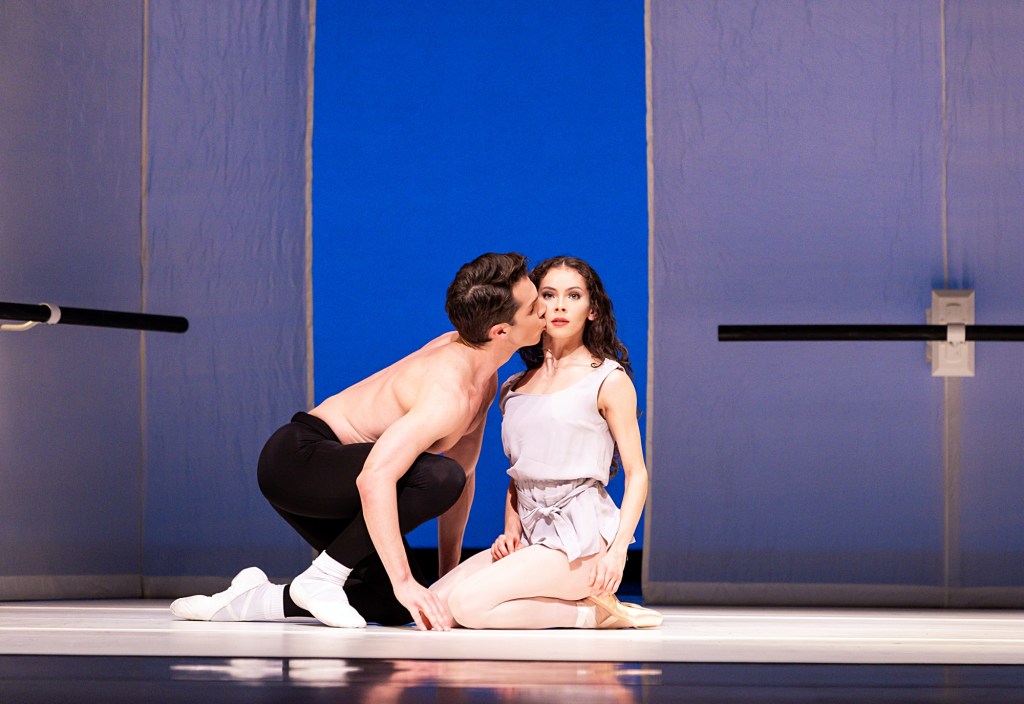
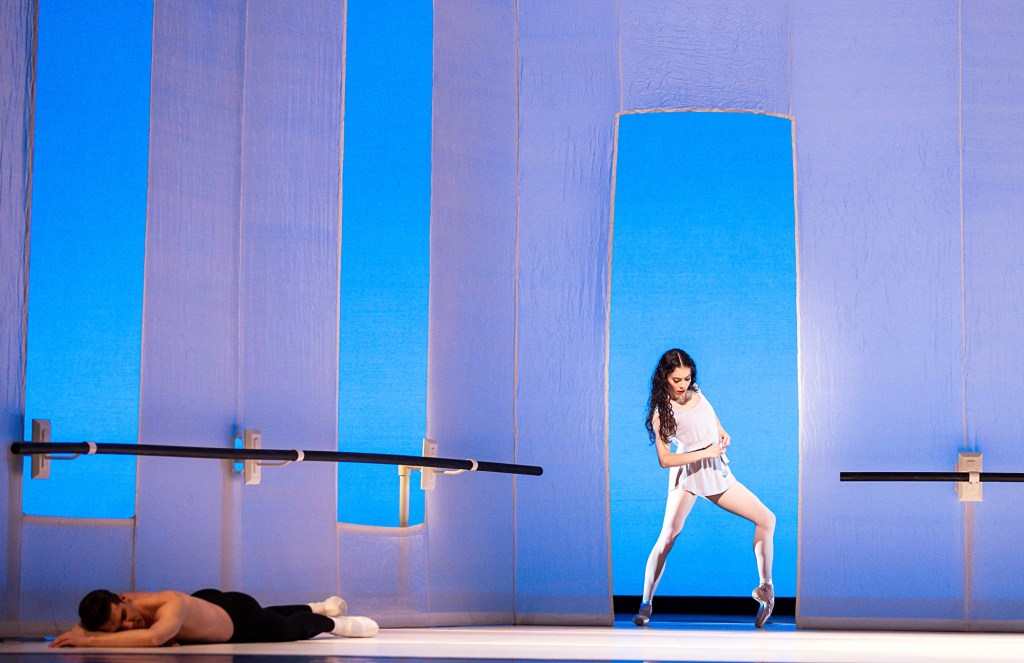
Danced to Claude Debussy’s “Prelude à l’Après-midi d’un Faune,” the 10-minute pas de deux took place within scenic and lighting designer Jean Rosenthal’s mock ballet studio set, complete with fabric walls, a marley floor, ballet barres, and in place of mirrors, the dancers directed their gazes out into the audience.
The ballet began with PNB principal dancer Lucien Postlewaite lying on the floor with his back to the audience. Like Nijinsky’s faun, who reveled in his masculinity and virility, a bare-chested Postlewaite then began to bend and stretch, primp and pose, reveling in his own vitality as a world-class dancer.
Company soloist Clara Ruf Maldonado then entered the mock studio space, taking the place of Nijinsky’s forest Nymphs in the original, and bringing with her an allure and sensuality that instantly aroused Postlewaite’s character. The pair began rehearsing a methodical and seductive pas de deux that seemed to entrance the dancers. A clever take on Nijinsky’s “Afternoon of a Faun,” the ballet, for the uninitiated, could also be seen as reducing the dancers to self-absorbed and vapid beings whose primal instinct is to be an object of desire.
Next came a reprise of choreographer Marco Goecke’s dark, moody, and bizarre solo work, “Mopey” (2004).
It began with soloist Kuu Sakuragi’s hands and arms appearing first in spotlight in sharp-angled, fast flinging movements. Once onstage, Sakuragi, costumed in dark pants and a hoodie cinched tight around his head, and looking like an urban ninja launching into horizontally moving choreography in silence that looked part martial arts, part hip hop and part insanity as he grabbed tightly his hood with both hands wrenching his head around as if trying to shake out an internal demon before exiting the stage.

Moments later, Sakuragi returned bare-chested as the stage lights went up and the third movement of C.P.E. Bach’s “Cello Concerto in A minor, Wq. 172” began. Goecke’s went from urban ninja to now more like a convulsive contemporary dance fit set to baroque music. Sakuragi flew about the stage in muscle-flexing, gestural choreography that had him waving and flicking his fingers, bouncing across the stage on his derriere, and engaging in a wild succession of beautifully bizarre and bravura dance movements.
The 15-minute work then slowed down for a moment as Sakuragi danced in silence before launching back into another movement tantrum set to surf music by The Cramps to conclude the solo.
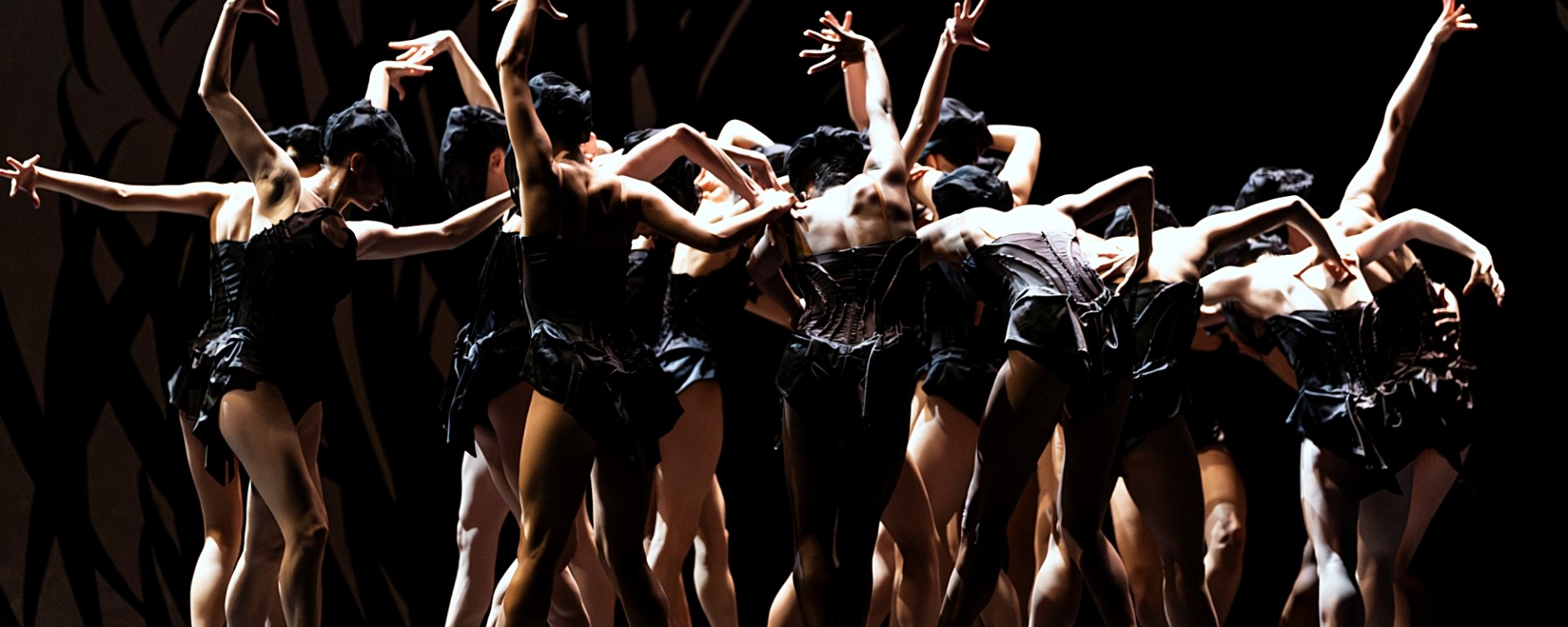
Crystal Pite’s 2009 forty-dancer group work “Emergence” then ended PNB’s production in grand fashion.
Danced to Owen Belton’s Dora Mavor Moore Award-winning original music for the work, “Emergence” was inspired by Pite’s reading of theorist Steven Johnson’s Emergence: The Connected Lives of Ants, Brains, Cities and Software and considering parallels between the social organization of bees and the hierarchical nature of classical ballet companies. Those inspirations dominated the 30-minute contemporary ballet work in its look, feel, and movement choices.
“Emergence” began with principal dancer Leta Biasucci lying on a darkened stage in the fetal position in a small pool of light. As if witnessing her birth, she began to move and stir, raising one arm, then the other, looking like a baby bird pushing its way through its shell.
Biasucci was then joined by a shirtless male dancer with a wing-like tattoo between his shoulder blades, who assisted her in standing and maintaining her balance as the pair melted into a shaky pas de deux whose movements grew steadier as it progressed.
The scene then shifted to reveal an image of a large, tunnel-like nest graphic at the back of the stage, from which 18 bare-chested male dancers, also adorned with wing-like tattoos and wearing black pants, emerged to dance Pite’s sharp, forceful choreography in unison.
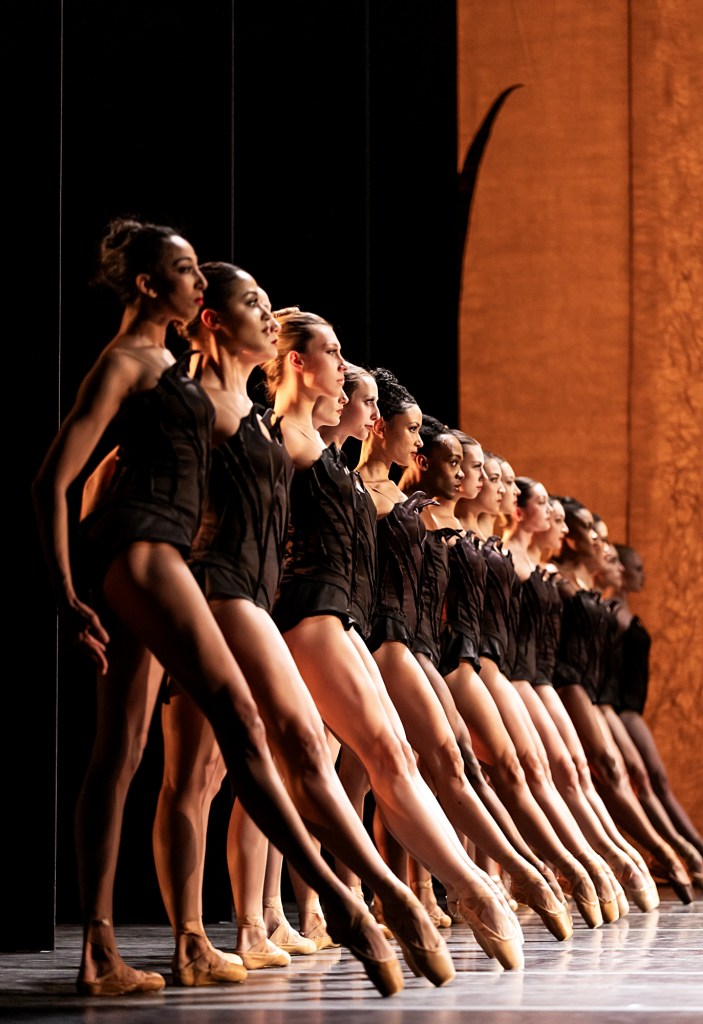
They were soon replaced by 19 women en pointe, dressed in all-black, feather-like costumes, and moving like a flock of ravens in unison as they counted from one to twelve in whispered voices.
As a choreographer, Pite is renowned for creating grand-scale ballets that feature elaborate lighting and visual effects. “Emergence” was all that and more.
After an intertwining pas de deux by principal dancers Dylan Wald and Elle Macy, set to cinematic and desolate music infused with electronic ticks and clicks, the large groups of dancers returned, strutting their walks, arms back and leading with their feet, as they displayed bird-like postures while moving about the stage.
Reminiscent of the communal drive of Vaslav Nijinsky’s Rite of Spring, Pite imbued the dancers’ movements with an instinctive feel while choreographing them masterfully.
Wonderfully danced, “Emergence’s” strange and spellbinding beauty provided a satisfying conclusion to a well-crafted program of contemporary ballet works.

 artsair.art