

By Steve Sucato
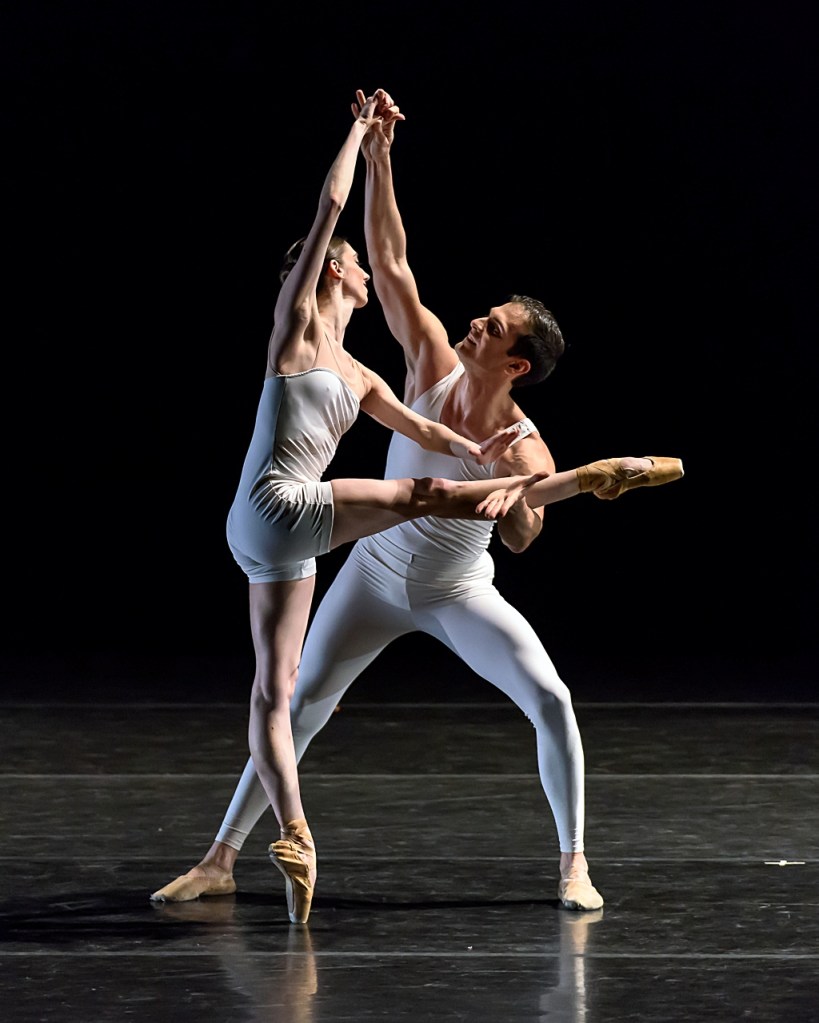
Whether the red-caped focal point in Heinz Poll’s Bolero, or the male anchor of many of the company’s marquee works, Ohio Contemporary Ballet’s Antonio Morillo has been the man in the middle of some of what’s been best about the company the past nine years.
An audience favorite, the 34-year-old Morillo will take his final curtain call with OCB this coming Saturday, June 21, in a free performance at Cain Park’s Evans Amphitheater.
Born in Coral Springs, Florida, Morillo is a first-generation Cuban American. Unlike many of his male peers, who began their dance training in childhood, Morillo didn’t take his first ballet class until he was 20 at Point Park University, where he was a musical theater major. After transitioning from musical theater to dance, he earned an Associate of Arts in Dance Performance from Valencia College and a Bachelor of Fine Arts in Dance Performance from the University of South Florida.
He joined Ohio Contemporary Ballet (then Verb Ballets) in 2016 and participated in two international tours with the company to Cuba. In 2024, he performed in Chicago at the Gerald Aprino Centennial Celebration. Morillo has also been a guest artist with the Next Generation Ballet, Tampa City Ballet, and Hudson Conservatory of Ballet. In 2017, he was selected by the Martha Graham Company to choreograph and present at the Next@Graham Studio Series in New York City.
I recently spoke with Morillo about his dance career, retiring from OCB, his promising choreographic career, and more.
What drew you to musical theater first, and then to dance?
I grew up as a military child and wasn’t exposed to the arts much in school. I have always known that I enjoyed entertaining people and making them laugh. I was outgoing as a kid, and my mother saw that quality in me and put me in an acting class in eighth grade. I really loved it. I couldn’t sing at first, but I got better. Attending Point Park University as a musical theater major, I realized that I didn’t have the commitment I thought I needed to be happy and successful in it. Once I took that first dance class there, I knew it was a better fit for me and my true calling.
How big of a challenge was beginning your dance training at age 20?
It was definitely difficult. I was not naturally flexible, and I had done weight training, which made my flexibility even worse. I even tore a hamstring muscle. The hardest thing, however, was transitioning from a theater performer mindset to that of a dancer. Actors and people in the theater feel more emboldened to express their opinions about their artistry, whereas in dance, that comes later. Initially, you are more like a piece of clay being molded. You are not asked for input; you are just told these are the steps and to do them. Being very headstrong, it took me a while to understand dance etiquette and to always show respect to the front of the room.


What is your biggest strength as a dancer?
I have been told by an audience member that I am the perfect combination of strength and grace. The company’s directors have also complemented my performance and storytelling ability. For me, I feel my versatility as a dancer is my biggest strength.
What is the best piece of advice you got about dancing?
Work hard and never make excuses.
What were some favorite roles or ballets you danced in your career?
I really enjoyed dancing [OCB Associate Artistic Director] Richard Dickinson’s ballets, especially Four Last Songs and Sometimes, Always, which was a challenge for me in that I had never done a role between two men in a romantic relationship. I also really loved dancing in Gerald Arpino’s ballets, Light Rain and Celebration, as well as being the center figure in Heinz Poll’s Bolero.
What will you miss about dance company life?
I will miss the daily grind of taking classes and fighting to stay in peak condition. I will definitely also miss the sense of community with my colleagues, working with them, playing off each other in the studio, and being so close as friends. Being a professional dancer in a small company is truly a unique experience. You really have to learn how to work with everybody in every situation.
What won’t you miss?
I won’t miss the psychological battle to be your best all the time. Having to show up every day and work to be in top physical condition, while also being mentally available, regardless of how you feel. I also won’t miss balancing the risk and reward of dancing and performing, and feeling like I’m constantly swinging on a trapeze, hoping not to fall.
Why retire from OCB now?
Initially, I wanted to accrue eight years of professional experience so that I could apply to MFA programs specifically for dance professionals. I did that and thought, ‘Why not go for 10 years with the company?’ As you get older, though, it’s a gamble on whether or not you’ll get injured because the work is so intense. Knowing I would soon be entering a rigorous MFA program in dance, I wanted to be in the best physical health possible.
What will be the focus of your MFA at Case Western Reserve University?
Dance pedagogy. I belong in the front of the room. I like helping people learn the craft of dancing and repertoire, perhaps more than I like performing it. I now have the proper experience in music and dance to do so, and I excel at memorizing movement, more so than many of my peers, which enables me to effectively teach repertoire.


Will you continue to dance?
If I have the opportunity to, I will. I can see myself freelancing, especially for Nutcracker productions.
You have shown a real talent for choreographing. What about that interests you?
I like to play around and make things for fun. As a kid, I would play with my action figures, make up stories, and create fight choreography for them. Making choreography now is my way of addressing a need to tell my own stories in dance form. I discover more about myself as an artist the more I work with other artists and create work for them.
What advice do you have for young dancers wanting to pursue a career in dance?
It is an incredibly difficult career. The only way you will succeed is if you truly love it and are willing to fully commit yourself to it. The most important work you will do is the work you do outside of the studio, learning the things you don’t know and developing your own artistic voice.
Do you have any hobbies outside of dance?
I play video games. When I’m not telling stories, I’m immersing myself in them. I enjoy magic and fantasy games, such as The Lord of the Rings. I also like playing Pokémon games.
Follow Antonio on Instagram @octoneber25

 artsair.art