
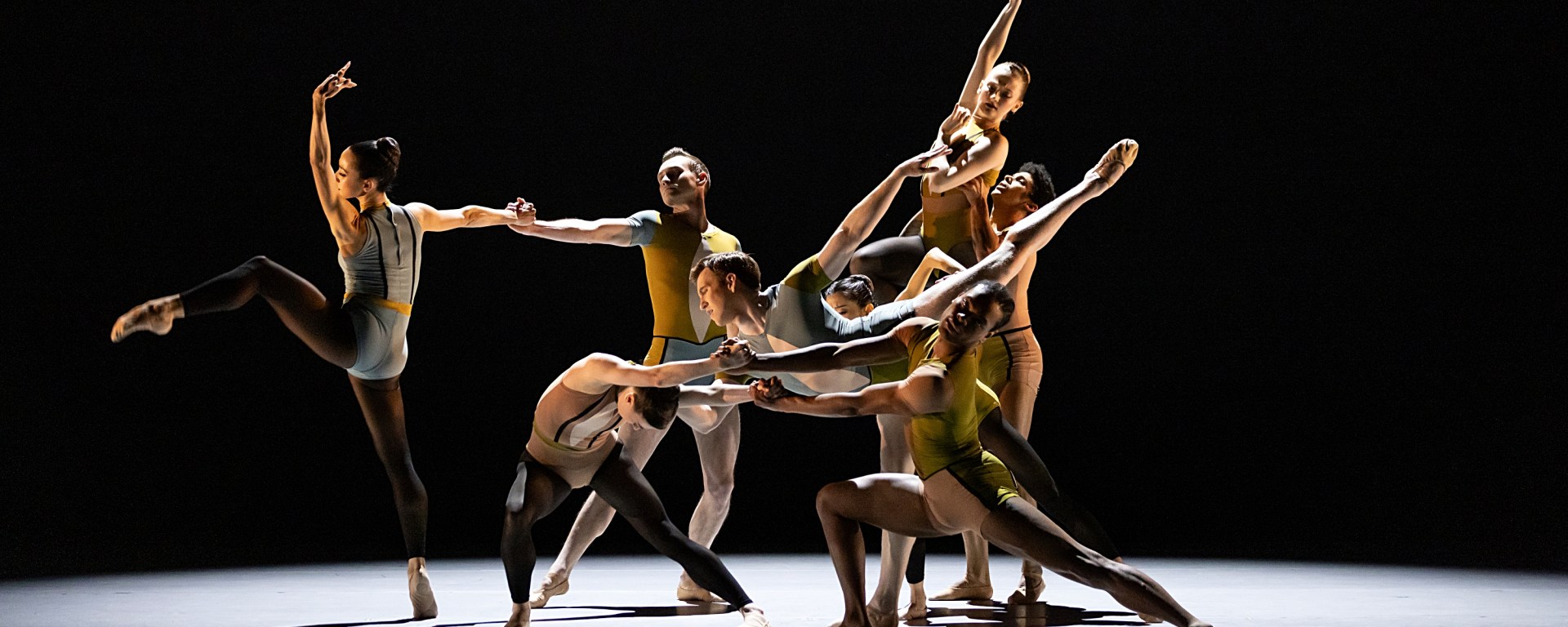
BalletMet – For the Love of Dance
Davidson Theatre at Riffe Center Theatres
Columbus, OH
March 21, 2026
By Steve Sucato
BalletMet’s latest triple-bill, For the Love of Dance, proved a high-caliber dance program befitting ballet companies several times its size.
The program at the Riffe Center’s Davidson Theatre in Columbus began with its marquee ballet, Alexi Ratmansky’s “Seven Sonatas” (2009).
The former Director of Russia’s Bolshoi Ballet is one of the creme de la creme of ballet choreographers working today. His 37-minute piece for three couples was a cut above anything I have seen from BalletMet in recent memory. It was performed to seven keyboard sonatas by the composer Giuseppe Domenico Scarlatti, which were played live with skill and delicacy by pianist Mariko Kaneda.
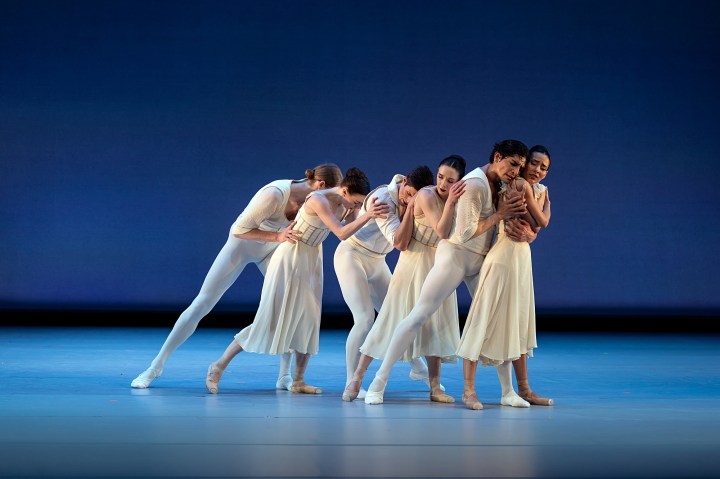
Masterfully crafted, technically complex, and delightfully musical, the ballet proved a physical manifestation of Scarlatti’s sonatas. BalletMet dancers Karla Iglesias Buela, Joan Sebastian Zamora, Sophie Miklosovic, David Ward, and Austin and Grace-Anne Powers triumphed in their performances of the neo-classical ballet.
“Seven Sonatas” is the kind of ballet that leaves its performers feeling challenged and gassed, and the audience awed. Tight pirouettes, turns, jumps, and leaps, along with lifts, leg beats, and intricate footwork, flowed adroitly from the dancers in solos, pas de deux, and trios. Each sonata’s dancing dazzled in its craftsmanship and execution.
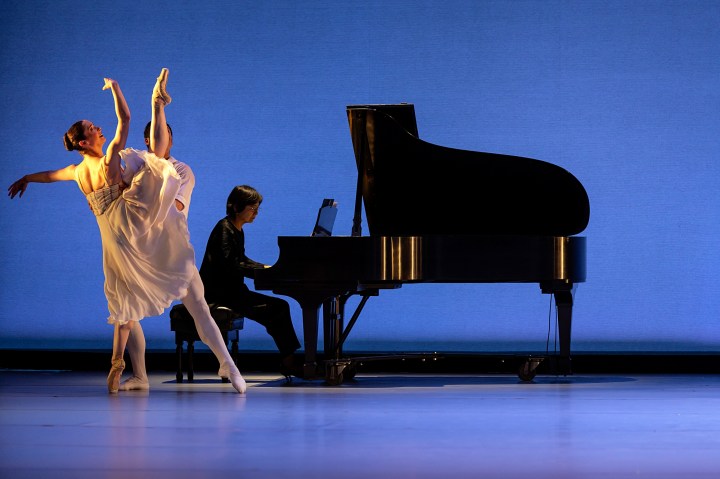
Most memorable were a demi-solo by Buela, whose fast footwork, turns, and traveling steps had her buzzing like a bee across the stage, and two enthralling pas de deux. One danced by Austin and Grace-Anne Powers featured highly expressive dancing, expansive movement, and solid partnering, and the other, performed by Ward and Miklosovic, saw Miklosovic revel in quicksilver movement that appeared especially created for her.
In the unenviable spot of following Ratmansky’s “Seven Sonatas,” BalletMet company dancer Leiland Charles’ third ballet for the company, “Divide & Conquer,” delighted in its own right.
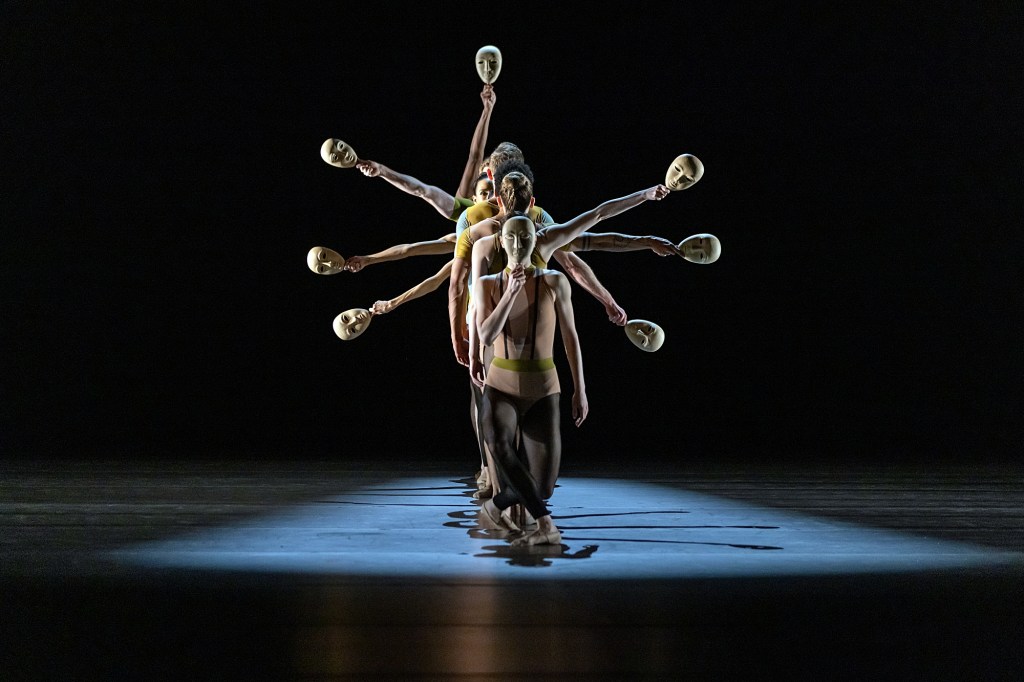
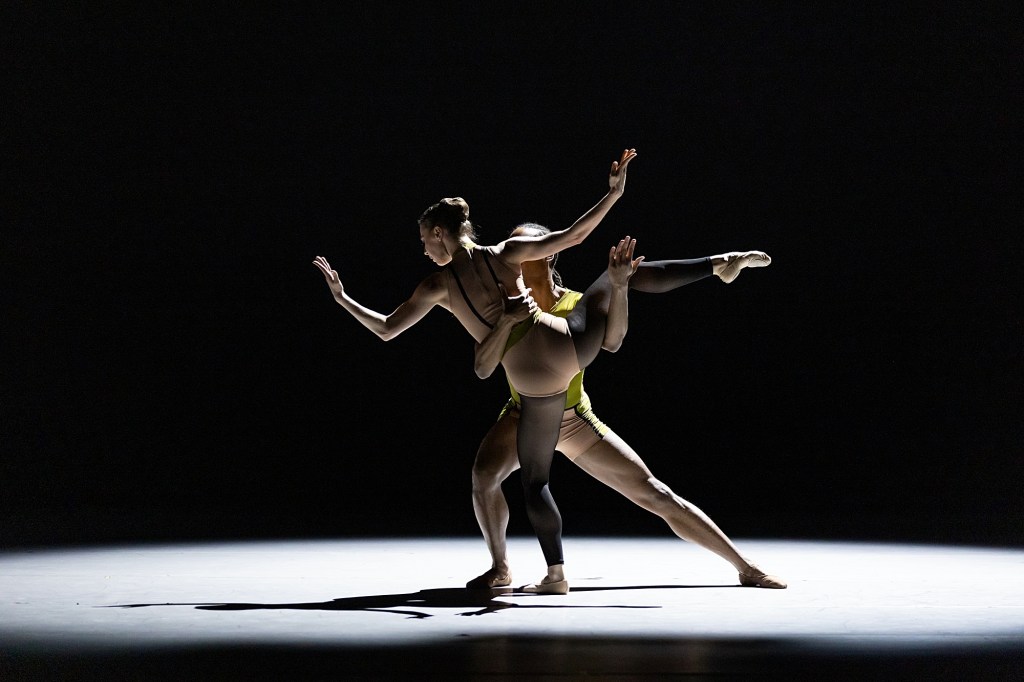
Not the measure of technical dancing found in Ratmansky’s ballet, Charles’ 21-minute contemporary ballet for four couples, however, proved visually captivating. Color-blocked costumes by Columbus College of Art & Design student Lily Murchie and lighting designer Jack Mehler’s spotlit pools and corridors of light, along with Belgian composer Wim Mertens’ music, created a cinematic landscape, look, and sound from which the ballet’s theme of “instances of compartmentalization in our day-to-day lives” played out.
Dancers flowed brilliantly from formation to formation, on and off the stage, in movement that was sharp and confident.
Another strong visual statement, the North American premiere of Spanish choreographer Juanjo Arqués’ “Ignite” (2018) came next to close out the program.
Set to music by English composer Kate Whitley, “Ignite” takes its inspiration from William Turner’s impressionistic paintings of the 1834 Burning of the Houses of Lords and Commons.
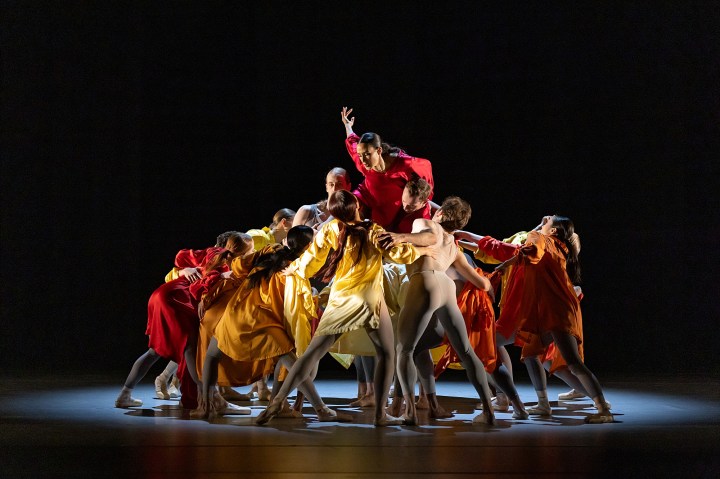
“Ignite” captured Turner’s use of fiery colors to convey the magnificent light and heat of a burning building onstage while taking the audience on a dynamic journey of motion and color.
Stage fog billowed, casting atmospheric lighting evocative of fire over the stage as the trio of Katelyn Yang, Miguel Wansing, and Lorrio and Charles, costumed in yellow, began a flurry of expansive and expressive movement. They were part of a large cast of twenty-two, costumed in color-coded groups of red, orange, yellow, grey, and white that represented smoke, fire, and ash.
Embracing the ominous mood of Whitley’s impressively dramatic music, the dancers darted on, off, and about the stage in energetic and panicked movement phrases.
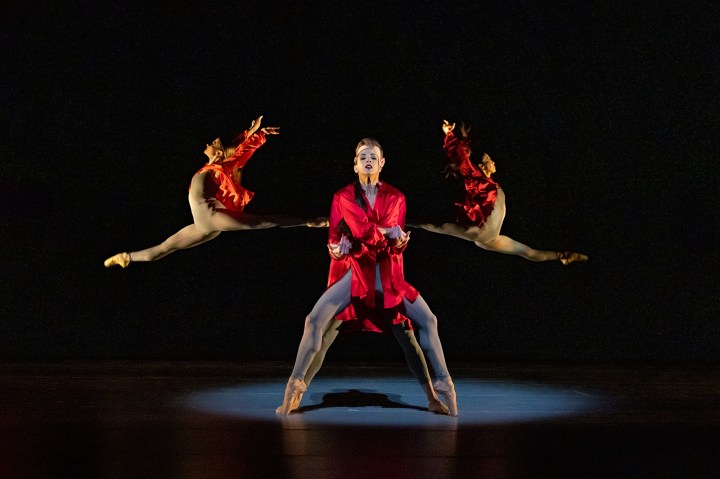
A ballet that built in intensity like a growing fire, “Ignite” featured many fine performances, none more so than a solo by Narciso Medina filled with bravura turns, jumps, and leaps that lit up the stage like a plume of flames, an inspired Francesca Dugarte throughout, and an elegantly beautiful pas de deux performed by Ward and Miklosovic to soaring string music in which the pair spun round in choreography had them looking like pairs figure skaters with Miklosovic lifted overhead and then whipped round by an arm and a leg.
A robust ballet program, For the Love of Dance, was quite lovely, not only displaying a love of the art form, but a love for the BalletMet’s dancers and its audience.

 artsair.art